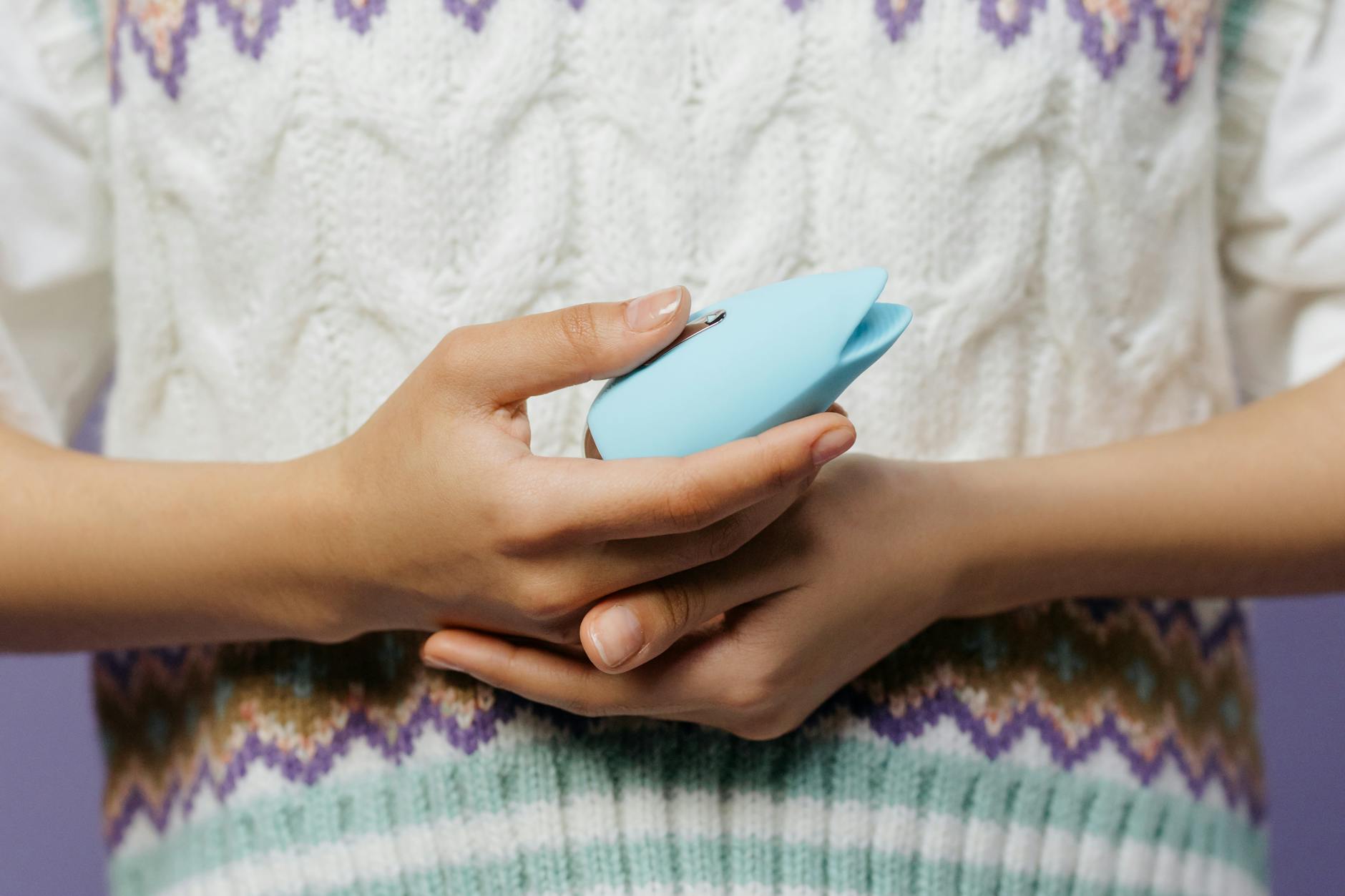
Let's name what's actually happening
You can feel yourself disappearing. Work deadlines pile up, family demands keep coming, the emotional load of managing everyone else's needs leaves zero space for your own body. Then one day you notice: nothing feels good anymore. Not food, not touch, not sex. You're going through the motions on autopilot, and your nervous system has basically logged off.
This isn't depression in the clinical sense. This is dissociation. This is what happens when chronic stress convinces your brain that survival means disconnecting from sensation. Your body becomes a vehicle you're driving, not a place you live.
Here's the thing that nobody tells you: reconnecting starts small. It starts with pleasure. And it starts with intention.
How stress creates numbness
When you're in chronic activation mode, your vagal tone gets stuck in the basement. The vagus nerve is basically your body's panic button and off-switch combined. It controls arousal, relaxation, and whether you can actually feel sensation below your neck. When it's in sympathetic overdrive (fight or flight), pleasure pathways literally go dormant. Blood doesn't flow to erogenous zones the way it should. Nerve endings quiet down. Your clitoris, which is this incredibly sensitive network of thousands of nerve endings, essentially goes to sleep.
Meanwhile, your brain is running a loop that says: pay attention to threats, not to sensation. This is helpful if there's actually a tiger. When the threat is your inbox, it's a trap.
The result: you can have sex and feel nothing. You can be touched and register it as noise. You can masturbate and wonder why you even bothered.
Why vibration works differently than you'd expect
Most people think vibrators are about intensity. Harder, faster, more stimulation. But that's not what reconnection is about. Reconnection is about waking up nerve pathways that have been asleep. It's about teaching your body that sensation is safe again.
A lemon clitoral vibrator, specifically, works because of how the suction mechanism engages tissue. Instead of blunt vibration, suction draws blood flow into the area while stimulating a broader network of nerves at once. This creates a kind of systemic awakening. Your clitoris gets engorged. Your pelvic floor registers the sensation. Your brain starts receiving signals it hasn't felt in months.
Suction-based stimulation also doesn't require the exact right angle or pressure that traditional vibrators do. If you're numb, you often can't locate sensation precisely enough to aim correctly. Suction is more forgiving. It works from a wider approach angle, which means your body gets to practice feeling again without performance pressure.
The role of intentional practice
Here's what I tell clients: this is not about chasing orgasm. Orgasm might come. Orgasm might take time. The goal right now is sensation awareness.
Set aside 15 minutes when you're not stressed or tired. Not ideal circumstances. Not perfect. Just slightly less chaotic than usual. Use a lemon vibrator alone, with the door locked, no screens, no distractions. Start on the lowest setting. The goal is to notice what you feel. Not whether it's working. Not whether you're getting there. Just: what is this sensation like in my body?
Many people reconnecting from stress numbness find that the first few sessions feel like nothing. Session four or five, something shifts. A tingle. A flutter. The beginning of arousal. Your nervous system is literally rewiring itself.
This works because suction-based clitoral vibrators bypass the numbness mechanism. They create sensory input that's strong enough to cut through the dissociation without being aggressive. There's no performance demand. Just sensation, waiting to be noticed.
The mental component is just as important
You can use the best lemon sexual toys in the world, but if your brain is still running the threat response, your body won't cooperate fully. The mental work is permission. It's the practice of telling yourself: my pleasure matters. My sensations are worth attending to. Feeling good isn't selfish or frivolous right now. It's actual nervous system repair.
If your stress is tied to a relationship, this is also where communication helps. "I'm feeling numb and I'm working on reconnecting with my body" is different from "I don't want to have sex." One is information. The other can feel like rejection. If you have a partner, naming what's happening takes the personal sting out of it.
For people exploring solo, the mental work is pure self-advocacy. Your body is not broken. It's protecting you. But the threat has passed, and now it's time to come home.
When to involve a professional
If you've been numb for more than three months, or if the numbness came on suddenly after a specific trauma or loss, that's worth discussing with a therapist alongside the physical reconnection work. Dissociation sometimes needs more than sensation practice. It needs nervous system regulation at the level of how you manage stress overall.
A Gottman Method specialist or trauma-informed therapist can help you understand what your body went into protection mode about, and whether there's anything in your current life that still feels unsafe. Sometimes embodiment work stalls because the threat hasn't actually been removed yet. Sometimes it's just that your nervous system forgot what safety feels like.
Neither situation means you're broken. It means you need slightly more support than pleasure alone can provide.
The timeline is individual, and that's okay
I've had clients feel reconnected within a month of consistent lemon vibrator use. I've had others take three months. The variation doesn't predict anything about whether it's working. It just reflects how individual nervous system regulation is.
What matters is consistency and gentleness. Using your clitoral vibrator twice a week with the intention of noticing sensation will rewire your body faster than sporadic use. But sporadic use is infinitely better than no use. Your nervous system wants to come back online. You're just giving it permission and the right tool.
Small sensations count
Reembodiment doesn't feel dramatic. It feels like: today I noticed the slight warmth starting. Yesterday I felt a tingle I haven't felt in a year. Last week, for the first time in months, I actually wanted sex. These are victories. These are your nervous system saying yes, I remember this, I want to live in this body again.
Use a lemon vibrator because the suction mechanism works with your body instead of against it. Use it alone first, without pressure. Use it with curiosity, not expectation. Your body will come back. It always does. You're not broken. You're just waking up.
People also ask
How long does it take for a lemon vibrator to help with body disconnection?
Most people start noticing small sensations within 2-4 weeks of consistent use (twice weekly, about 15 minutes). Meaningful arousal and pleasure often return within 6-12 weeks. The timeline depends on how long you've been numb, what caused it, and how much stress is still present in your life. If stress is ongoing, progress is usually slower. If the stress has passed and you're in actual recovery mode, reconnection tends to accelerate around week six.
Can you use a lemon clitoral vibrator if you're completely numb?
Yes, actually. Suction-based clitoral vibrators like the Lem are designed to work even when sensation is muted because they create strong sensory input across a broader area. You won't necessarily feel intense pleasure immediately, but you'll likely feel something. That something is the starting point. Keep using it consistently, and the sensations will deepen as your nervous system remembers how to receive pleasure.
Is it normal to feel nothing the first time you use a lemon vibrator?
Completely normal. Your body has been in protection mode. It's not going to suddenly trust sensation on day one. Think of the first few sessions as an introduction, not as a test. You're showing your nervous system that this stimulation is safe and pleasurable. That takes repetition. By session five or six, most people feel something shift.
Should you use a lemon vibrator if you have a partner, or is it just for solo use?
Both. Solo use helps you reconnect with your own body without performance pressure or the need to manage someone else's needs. But once you've started that reconnection, many people find that lemon adult toys can also work beautifully with a partner. The suction mechanism doesn't require the precision that some vibrators do, so it can be easier to use together without awkwardness. Start solo, then integrate your partner when you feel ready.
What if you use a lemon vibrator and still feel nothing after several weeks?
This might mean you need additional support. Persistent numbness sometimes indicates that the stress or trauma causing the disconnection is still active. Talk to a therapist, especially if you've also experienced a significant loss, relationship breach, or recent trauma. Sometimes the body won't reconnect until the nervous system feels genuinely safe, and that safety work sometimes requires more than vibrators alone. That doesn't mean the vibrator isn't helpful. It just means you might need to address the underlying stress at the same time.
How does using a lemon sexual toy alone differ from using one with a partner?
Solo use is about you reconnecting with your own sensation, without pressure to perform or respond a certain way. This is usually the starting point. With a partner, there's additional benefit: you're rebuilding trust in your body being touched, and they're learning how your body responds now. But the initial reconnection work is better done alone. Once you've rebuilt baseline sensation, partnered exploration becomes much easier because you already know what works for your body and what your own arousal looks like.
References and sources
Dissociation and numbness are well-documented responses to chronic stress and trauma (van der Kolk, 2014). The vagus nerve's role in arousal and pleasure is established in neuroscience literature on sexual response and nervous system regulation (Porges, 2011). Suction-based stimulation and clitoral blood flow mechanics are documented in sexual medicine research (Salonia et al., 2006). Gottman Method therapy and trauma-informed approaches to reconnection are evidence-based practices in relationship and somatic therapy (Gottman & Silver, 2015; Levine & Kline, 2007). Individual timelines for nervous system recovery vary, but consistent practice and safety are the primary mechanisms (Brown & Gerbarg, 2012).