Let's start where most couples get stuck
You want to feel close. Your partner wants to feel wanted. Neither of you is saying it out loud. So you fall into the same rhythm you've always known, which is comfortable but not quite connecting. Then someone suggests bringing a toy into the bedroom, and suddenly you're both thinking: "Will this fix us or make it weirder?"
Honestly? The right vibrator, used the right way, can rebuild something real between you. I've worked with hundreds of couples, and I've watched lemon vibrators become the bridge between isolation and intimacy.
Why toys actually deepen connection instead of replacing it
This is the part most people get backwards. The fear is that introducing a device means your partner isn't enough. The truth is the opposite. A lemon vibrator removes the pressure to perform a version of pleasure that doesn't exist in your body. When that pressure lifts, you can finally be present.
Here's the neurochemistry: when someone is focused on producing an orgasm, their nervous system is in achievement mode. When they stop chasing it and actually feel it, their nervous system shifts into connection mode. That's when eye contact becomes easy. That's when you can say "I love you" without it feeling like a line. That's when intimacy happens.
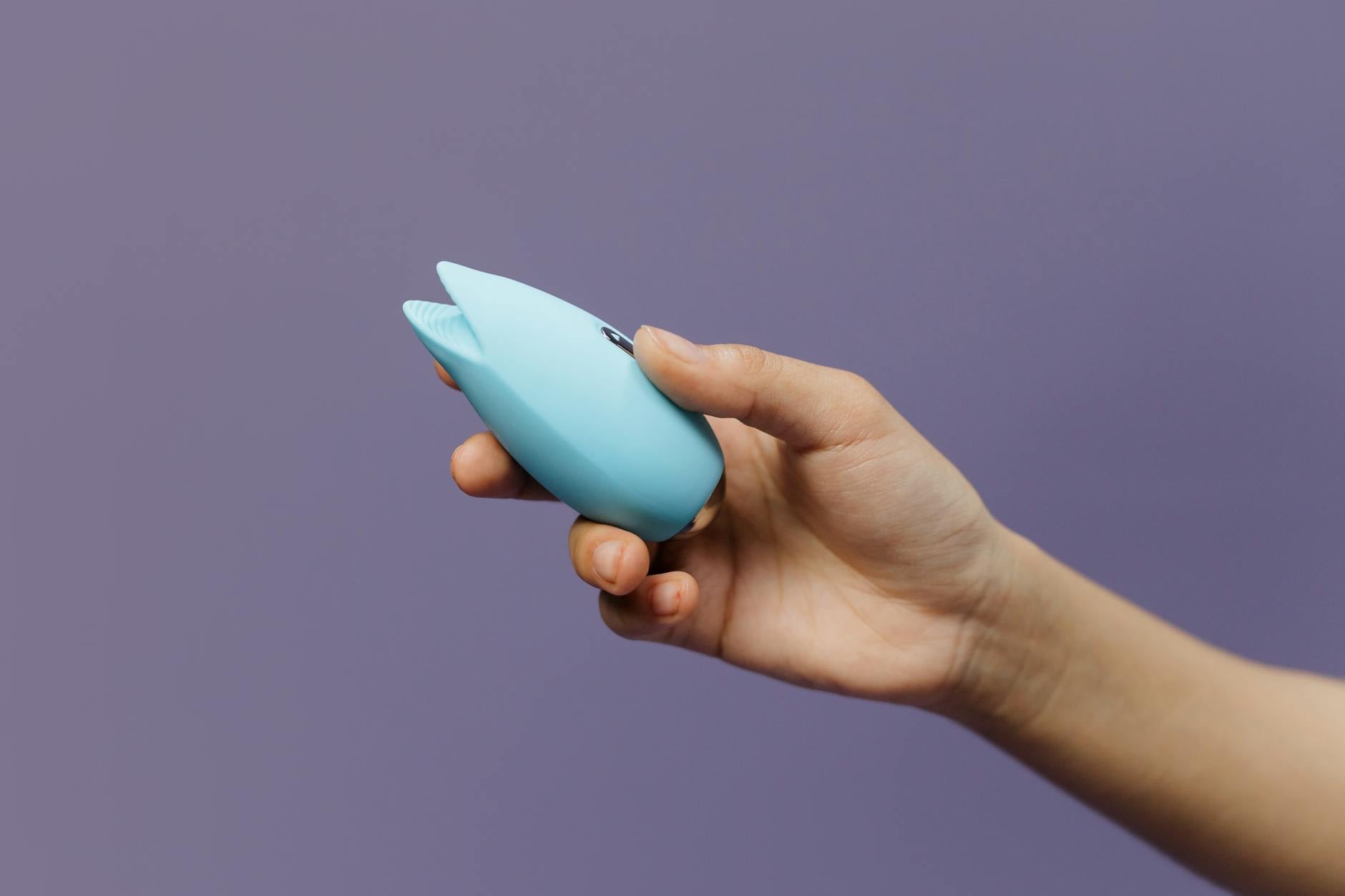
A tool like the Lem works particularly well because it's designed for external clitoral stimulation. It doesn't replace your partner. It removes the friction (literally and metaphorically) so your partner can focus on presence instead of technique.
The specific shifts I see in couples who do this well
Three things consistently happen.
First, communication gets better immediately. Couples who've never talked about what feels good suddenly have to. "Does this pattern work for you?" "Would you like it higher or lower?" These aren't sexy questions, but they're the foundation of every truly intimate relationship. Vulnerability in that conversation is what builds real closeness.
Second, pleasure becomes less linear. Before a vibrator, many couples follow the same trajectory every time. Introduction, escalation, orgasm. With a lemon clitoral vibrator in the picture, the experience becomes more exploratory. You might spend twenty minutes on sensation without destination. That's where play lives. That's where laughter and surprise come back.
Third, your partner gets to experience you fully. When you're not managing your own pleasure or performing for them, they get to actually watch you experience something that feels good. That shifts them from participant to witness, which is a completely different kind of intimate.
How to introduce this without it feeling awkward
Timing matters. Don't bring a vibrator into the conversation during sex or right before. Pick a time when you're both relaxed and clothed, maybe after dinner.
Frame it as curiosity, not criticism. "I've been thinking about deepening our connection" works better than "You're not satisfying me." Those mean different things, even if part of you feels both.
Be specific about why. Is it about sensation? About lasting longer? About exploring together? The why determines whether a lemon vibrator is the right tool or if you need something else. If the issue is that you need more time to warm up, a clitoral vibrator makes sense. If it's about lasting longer, that's a different conversation entirely.
Start small. You don't need the most expensive model. The Lem is excellent, but even a smaller vibrator helps you both get comfortable with the experience before you decide if it's right for your relationship.
What actually happens the first time you use it together
It will feel a bit clinical at first. There's a learning curve with the settings, the angle, how much pressure feels good. This is normal. The first time isn't about mind-blowing pleasure. It's about information gathering. You're learning your body together.
Most couples report that by the second or third time, something clicks. The novelty wears off, but the intimacy deepens. You've crossed a threshold together. You've been vulnerable. You've asked for what you need. That's the foundation of real closeness.
Meanwhile, physically, something's shifted too. When you're not tense about reaching orgasm, your body relaxes. When your body relaxes, sensation amplifies. When sensation amplifies, orgasm often becomes easier, not harder. Your partner might notice that you're more responsive, more present, more vocal about what feels good. That feeds their sense of being wanted, which is what drew them to this conversation in the first place.
When lemon vibrators help rebuild after distance
I work with a lot of couples who've grown apart. Maybe you've been stressed, working too much, or just focused on kids and logistics. Sex became something you check off the list instead of something you experience together.
When you introduce a lemon vibrator to that dynamic, it forces reset. You can't autopilot. You have to pay attention. You have to be present. And presence is where intimacy actually lives.
One couple I worked with had been together for seventeen years. They loved each other but hadn't had real sex in months. Too much resentment, too much exhaustion. We talked through the resentment separately, but the real turning point was when they decided to explore together with a vibrator. Not because it would magically fix things, but because it was a symbol that they were both willing to try something new. That willingness mattered more than the device itself.
The emotional permission you're actually giving each other
Here's what a lot of people miss: when you say "I want to use a clitoral vibrator together," what you're really saying is "Your pleasure matters. My pleasure matters. And we're worth being creative about this."
For a lot of people, especially those socialized as women, asking for pleasure directly feels selfish. A vibrator becomes permission. It's not you asking, it's a tool asking for you. That distinction is real and it matters.
For partners, introducing one of these toys often feels like their person is finally letting them in. Like they finally trust them enough to say what they need. That's intimacy.
When to bring a couples therapist into the conversation
If your relationship has deeper issues, a vibrator won't fix them. If you have unresolved anger, poor communication, or a partner who feels threatened by the idea, you need to work through that first.
But if you're fundamentally solid and just disconnected from desire, or stuck in a rut sexually, a lemon vibrator often helps unlock what's already there. As a therapist, I've found that couples who explore this together often report feeling closer in non-sexual ways too. They're more affectionate. They text more. They laugh together more. The intimacy flows in both directions.
If you're not sure whether your relationship is ready, that's worth exploring with a professional. But if you both feel like you're missing something, and you're both willing, this is often the bridge back.
Real talk on sustaining this once the novelty fades
The first few times are exciting because everything's new. The real test is whether you can build a sustainable practice around it. Here's what works:
Make it routine but flexible. Once a week, maybe. Not a chore. Not something you're forcing. But intentional enough that it becomes part of your connection practice. Like date night, but hotter.
Keep exploring. Different settings on the Lem. Different positions. Different contexts. Sometimes use it as foreplay. Sometimes as the main event. Sometimes just to reconnect on a Sunday afternoon. Variety keeps it alive.
Talk about it after. "What felt good?" "What do you want to try next?" These conversations are often where the deepest intimacy happens. You're building a shared language around pleasure.
Remember that lemon vibrators, like any tool, serve your relationship. They don't define it. If you ever feel pressure to use one, or like you should want to but you don't, that's worth listening to. Your body knows what it needs.
The bottom line on intimacy and vibrators
Deeper connection doesn't come from a device. It comes from presence, vulnerability, and the willingness to be seen. But when a barrier to that presence is removed (like the pressure to perform), closeness becomes possible. That's what lemon vibrators do for couples. They clear the space. What you build in that space is entirely up to you.
If you're ready to explore this with your partner, start the conversation this week. Not with a vibrator in hand. With words. "I want to feel closer to you." Everything else follows from there.