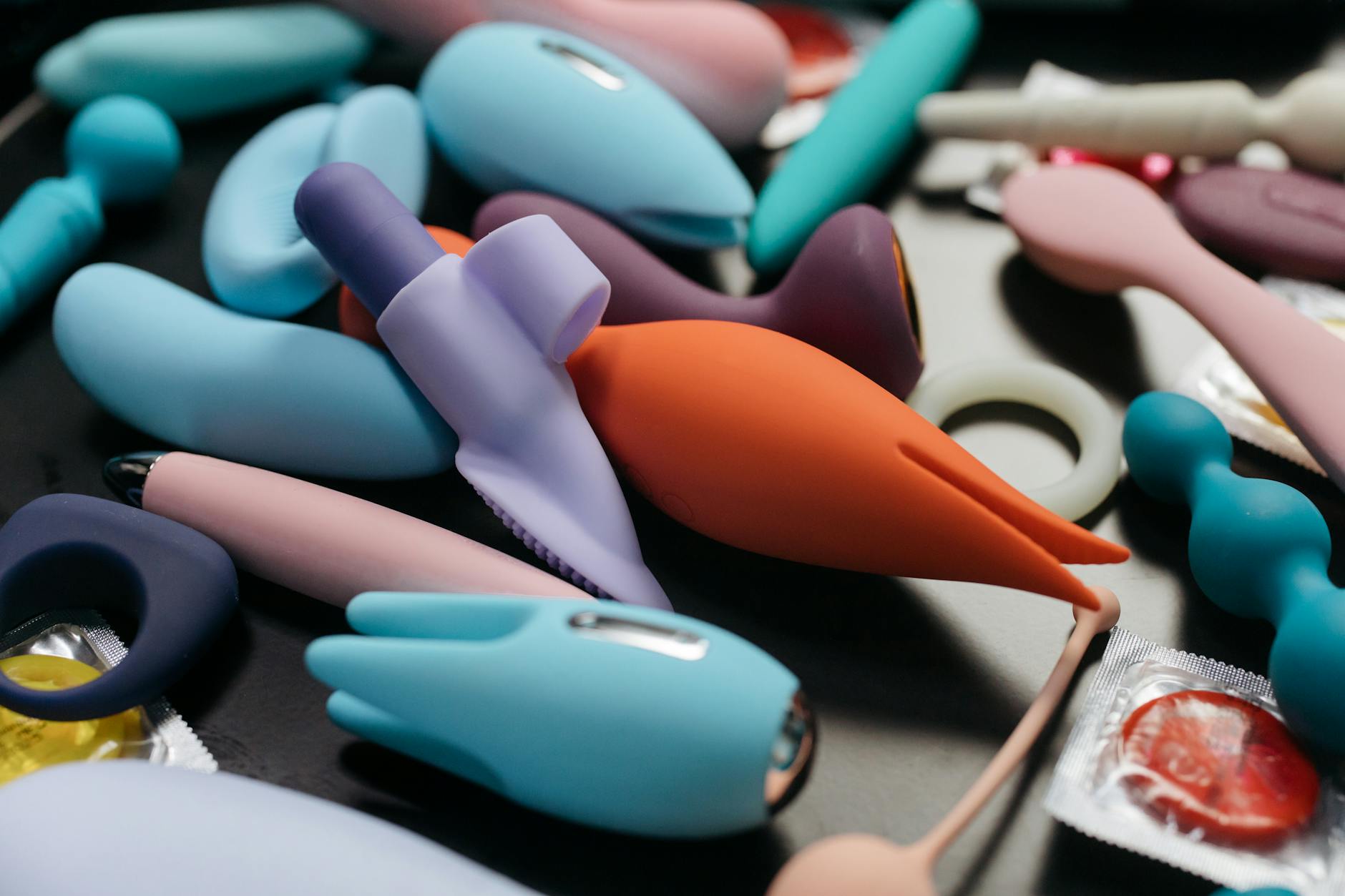
Here's what nobody tells you about orgasm timing
Two people in bed. One person typically climaxes in 5 minutes. The other needs 20. Neither is doing anything wrong. Both are frustrated. This is the script most couples follow, and it's quietly eroding something that should feel easy.
The gap creates a real problem. One person finishes and goes soft, checks out, or starts performing completion they don't feel. The other person loses momentum because now the dynamic changed. Someone's thinking "Am I taking too long?" Someone else is thinking "Why do I have to rush?" Both people feel unheard. And then sex becomes less appealing, not more.
Here's what I've learned after two decades of working with couples on this exact issue: the timing gap isn't a libido mismatch. It's not a sign you're incompatible. It's a design problem that's been solved. And the solution is almost always simpler than the resentment it created.
Why the timing gap happens in the first place
Biology matters here, but not in the way most people think.
Clitoral stimulation typically needs sustained, focused pressure to build to orgasm. Penetrative stimulation or partner-focused timing doesn't naturally provide that. So the person with the clitoris often needs solo stimulation or a specific kind of touch to finish. Meanwhile, the partner who responds quickly to penetration or partnered rhythm reaches climax on that timeline and then has nowhere to go.
It's not laziness. It's not lack of attraction. It's that two different bodies are being asked to perform on one timeline.
Add emotional layers on top. Performance pressure kills arousal. If someone's thinking "I'm taking too long and my partner is losing interest," that anxiety literally delays orgasm. It's a vicious loop. The more someone worries about timing, the longer it takes. The longer it takes, the more pressure builds.
And then resentment creeps in. One partner feels abandoned post-finish. The other feels rushed, unsupported, or inadequate.
What changes when you bring a toy into the dynamic
Here's the thing that surprises most people: a lemon clitoral vibrator doesn't complicate the conversation. It completely reframes it.
With a clitoral vibrator like the Lem in the mix, both people can finish in their own body's actual timeline. The person who naturally climaxes faster can penetrate or stimulate their partner while their own pleasure continues through a different kind of touch. Or both people can receive simultaneous clitoral stimulation and finish at roughly the same moment. Or one person uses the vibrator solo while the other provides partnered touch.
Suddenly it's not one person waiting for the other. It's both people getting what their bodies actually need. That's the entire dynamic shift right there.
A lemon sucker vibrator also works because it doesn't require the same kind of friction that can feel intense or uncomfortable. The suction sensation builds arousal in a way that feels different from traditional vibration. For people with different arousal curves, that different sensation can actually sync things up better than matching rhythm alone.
The conversations that need to happen before you introduce a toy
Here's where most couples skip a step and end up more frustrated.
Before you bring a vibrator into bed, you need a conversation outside of bed. Not a heavy one. But honest. The conversation is: "My body and your body have different timelines. That's not wrong. That's just true. And I want us to both feel good and finish feeling close, not rushed."
Then talk about what that looks like. Maybe it's the person who finishes first uses their hands on their partner while their own body settles. Maybe it's both people using toys at the same time. Maybe it's the person with the vibrator leading the pace while the partner adds touch elsewhere.
The point isn't the configuration. The point is that you're solving the problem together instead of pretending it doesn't exist.
When someone introduces a toy without this conversation, the partner on the receiving end might feel replaced, or worry the toy means something's wrong with them. Those feelings are real even if they're not based in truth. The conversation prevents that.
How to actually use a lemon vibrator when you have timing mismatches
Three approaches that work most often.
Approach 1: Both starting at the same time. You're both stimulating the clitoris at the same time using different sensations. One partner uses the lemon vibrator while the other adds manual stimulation or penetration. This works well because both people are building arousal simultaneously and can finish at a more similar pace.
Approach 2: Sequential climax. One person reaches orgasm first using a combination of partnered touch and the vibrator, then switches roles. The person who typically takes longer receives sustained clitoral vibration while their partner provides other touch. This removes the pressure from whoever's body is slower. They're not performing on anyone's timeline but their own.
Approach 3: During penetration. If penetration is part of what you do, one partner uses the lemon clitoral vibrator while the other penetrates. This is wildly effective because the penetrating partner gets the sensation they need while the person with the clitoris gets the sustained stimulation that actually builds their arousal. A lot of couples report this is when both partners finish closest to the same moment.
What changes emotionally when the timing gap closes
The shift is almost always bigger than people expect.
When both people finish around the same time, the post-orgasm moment stays connected. You're both still present. You're both still in your body. That moment of shared completion is actually powerful for emotional intimacy. A lot of couples tell me this is when they feel most bonded.
There's also a psychological relief. The person who typically takes longer stops apologizing for their body. The person who finishes quickly stops feeling guilty or inadequate. You're both just... finishing. Like normal. Like there was never a problem in the first place.
And sex becomes something you both want to do, not something you're both managing. That matters way more than the physical part.
When this doesn't solve the whole thing
Let's be real: a vibrator is a tool. It's not a relationship therapist.
If the timing gap is actually a symptom of something else (mismatched desire, resentment about other things, communication that's broken outside the bedroom), then the vibrator will help with the symptom but not the cause. You still need the bigger conversation.
But if the timing gap is genuinely just that. A timing gap. An incompatibility between two normal bodies that need different things. Then a tool that lets both people get what they need is often the entire solution. One person uses a lemon clitoral vibrator and suddenly both of you finish satisfied. That's not a workaround. That's just smart.
The same applies if one partner has been recovering from numbing medications or if arousal takes longer to build for other reasons. A lemon vibrator and patience can help rebuild that synchronicity. Some people find that once timing becomes less stressful, the rest of the connection deepens too.
What I've learned is that couples often treat the timing gap like a character flaw when it's just a logistics problem. And logistics problems have solutions.
FAQ: Orgasm timing and how to navigate it with a partner
Why do some people orgasm faster than others?
It comes down to nerve density, arousal threshold, and how stimulation is delivered. The clitoris and penis have very different stimulation needs to reach orgasm. Clitoral orgasm typically requires sustained, focused pressure. Penetration alone often doesn't provide that. Meanwhile, penetrative stimulation may bring someone with a penis to climax quickly. Neither is better. They're just different.
Is it normal to have completely different orgasm timings?
Completely normal. In fact, studies suggest that arousal and orgasm timelines differ in most partnerships. The pressure to synchronize comes from nowhere except maybe movies. Real couples have real timing gaps.
Can a lemon vibrator help even if one person doesn't usually orgasm from partnered touch?
Yes. The vibrator provides a different kind of stimulation that might work when partnered touch alone doesn't. For some people, the sustained suction sensation of a lemon clitoral vibrator triggers orgasm when nothing else does.
What if my partner feels replaced by a vibrator?
That's the conversation to have outside the bedroom first. The vibrator isn't replacing them. It's augmenting what you're already doing together so both people can finish feeling good. Frame it as a team move, not a solo one.
Does introducing a vibrator mean something's wrong with our sex life?
No. It means you're problem-solving. It means you care about both people finishing satisfied. That's actually a sign things are working, not that they're broken.
How do I bring this up without sounding like I'm criticizing my partner's body?
Lead with your own body. "I want to try something that might help me finish when we're together." That's it. You're not critiquing. You're advocating for yourself.
The timing gap doesn't have to create distance
I've watched couples spend years managing a conversation they never actually had. One person apologizes for finishing too fast. The other apologizes for taking too long. Both people end up feeling inadequate. Meanwhile the solution was always right there.
A tool like a lemon clitoral vibrator doesn't magically fix relationships that need bigger work. But when the gap is genuinely just a gap. When it's two normal bodies with different arousal curves. When one person needs fifteen minutes and the other needs five. That's when a vibrator becomes what it actually is. A practical solution. A conversation starter. A way to let both of you finish feeling connected instead of rushed.
Your orgasms don't have to sync perfectly. They just have to both matter. A lemon vibrator is one way to make sure they do.