The therapy paradox nobody warns you about
You've been sitting in a therapist's office for weeks. You're having real conversations again. You're learning tools. You're communicating better. And then you go home, close the bedroom door, and freeze. Because talking about repair and actually touching each other again are two very different things, and one of them still feels terrifying.
This is normal. It's also fixable. And sometimes it needs more than just words.
Why couples therapy can create an intimacy gap
Here's what happens: Therapy gives you language and safety protocols. You learn about boundaries, needs, and where the relationship fractured. But therapy doesn't automatically rewire your nervous system's response to your partner's touch. It doesn't erase the years of distance or resentment or disconnection that built up. It creates the space for reconnection. That's not nothing. But it's not the same as actually reconnecting.
Many couples come out of intensive couples work feeling closer emotionally but more confused physically. The vulnerability is there. The trust is rebuilding. But sex still feels like a test you might fail, or a thing you haven't earned yet, or something so loaded with meaning that it has to be perfect and therefore feels impossible.
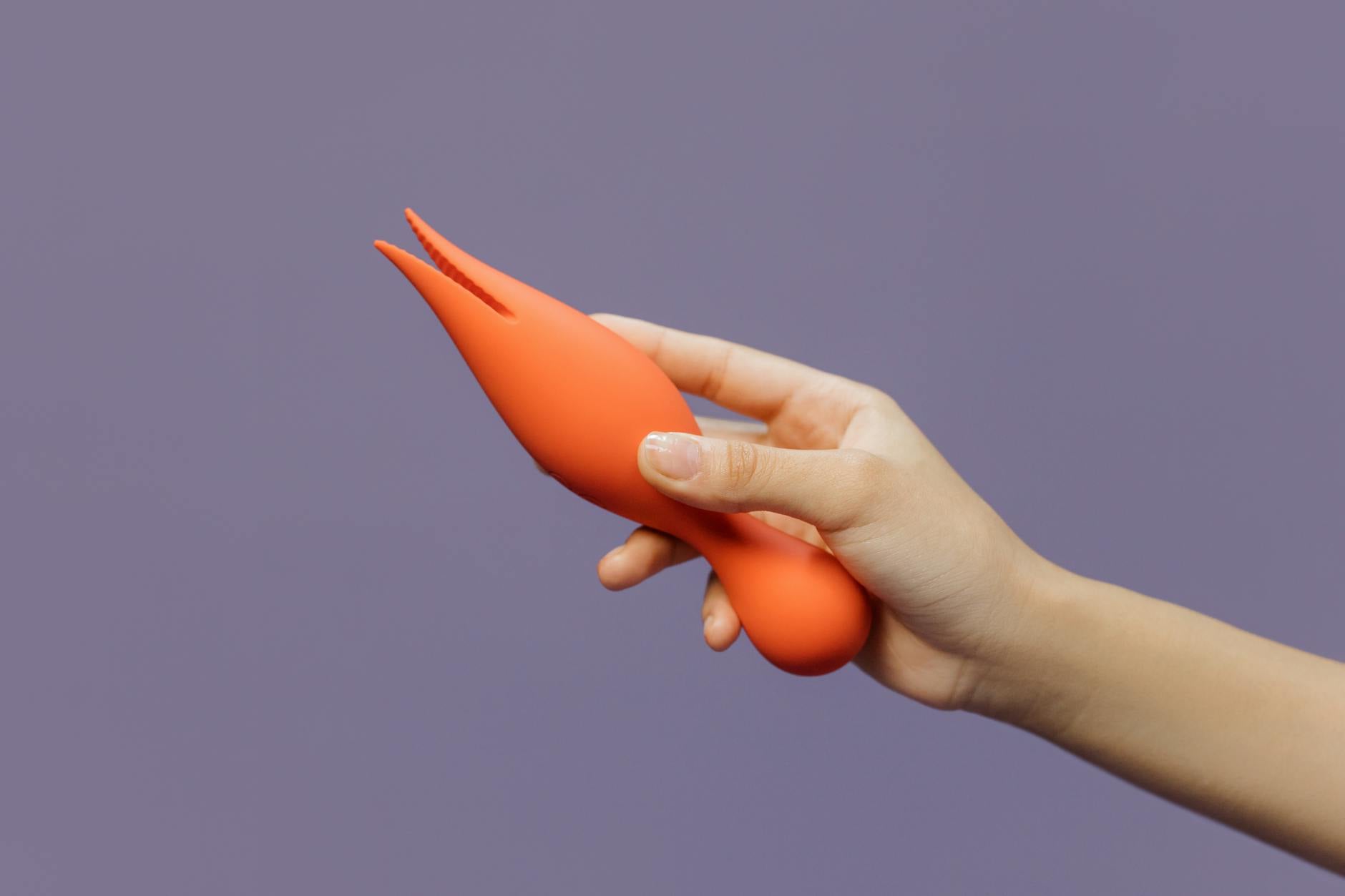
That's where a tool like a lemon clitoral vibrator enters quietly. Not as a replacement for your partner. Not as a shortcut around doing the work. But as a bridge between the safety you've created and the physical reconnection you're both trying to rebuild.
Why a lemon vibrator specifically works during therapy recovery
When couples are rebuilding intimacy, the body often needs something different than it did before. The nervous system is more alert. Touch can feel overwhelming. Pressure to perform is sky-high on both sides. A lemon vibrator addresses all three of these problems at once.
The sensation is gentle but clear. Unlike hands, which can feel unpredictable when you're still cautious about your partner, a lemon vibrator delivers the exact same pattern every single time. This predictability is soothing for a nervous system in recovery. There's no guessing, no accidental pressure, no performance anxiety about whether your partner is doing it right. The vibration just... is.
It requires less vulnerability on one partner's part. If you're the partner who's grieving the loss of how things were, or who feels disconnected from their own pleasure, a lemon vibrator lets you participate in intimacy without having to "perform" arousal. You can explore what feels good at your own pace, while your partner is present and engaged. That's a completely different experience from being watched or expected to orgasm.
It shifts the focus away from penetration. Many couples coming out of therapy realize that their sexual scripts were built around performance metrics (intercourse, orgasm on someone else's timeline) rather than connection. A lemon vibrator refocuses everything on clitoral pleasure, which tends to be slower, more relational, and harder to fake. It brings you back into your body, which is the real work.
The conversation you need to have before you even mention the vibrator
Don't just put a lemon vibrator on the bedside table and hope they notice. That's not reconnection. That's a land mine.
The conversation should happen outside the bedroom, outside the body-vulnerable moment. It should also sound nothing like you're asking permission. Here's roughly how I coach couples to do this:
"I've been thinking about what we talked about in therapy about reconnecting physically. I'm excited about it, but I'm also nervous because I want it to feel good for both of us. I read about something that might help us both relax and remember what we actually enjoy. It's a clitoral vibrator called a lemon sucker. Have you heard of them? What would you think about exploring that together?"
Notice: this isn't a demand. It's not shame. It's not "I don't find you attractive anymore so I need a toy." It's "Here's something that might help us both feel safer and more present." Frame it as a tool for mutual reconnection, not an addition or a replacement.
Then listen. Your partner might say yes immediately. They might be curious but nervous. They might say no. All of those are real answers, and they're all information. If they say no, don't push. But do ask why. "Is it something about the toy itself, or is it about the idea of me using it during sex?" Those are different objections and they point to different solutions.
The first time you actually use it together
Don't make this your first time doing anything physical. You should have kissed. You should have been intimate without genital contact. You should have touched each other's bodies and remembered that intimacy isn't a performance. Then, when you're both ready, introduce the lemon vibrator.
Start with the partner who's most curious going solo first, while the other partner is simply present. Not watching. Not performing. Just there, maybe reading in the same room, giving permission and presence without pressure. This matters because it separates "I'm learning what this tool feels like" from "We're having sex and it needs to work."
Once you've used a lemon vibrator alone and it feels normal, bring it into partnered time. The person with the vibrator is in control of the speed, pattern, and pressure. The other partner can touch, kiss, be intimate in other ways, but they're following the lead of the person holding the vibrator.
This is crucial: this is not about the person with the vibrator performing for their partner. This is about the person holding the vibrator exploring what feels good while their partner witnesses and participates in that. The difference is everything.
How timing matters in the recovery timeline
There's a common myth that you should wait until "you're healed" to use tools like a lemon clitoral vibrator. But healing isn't a destination. It's a direction. You don't wait until you're completely fixed to start moving toward your partner again.
When couples are in active therapy, I usually suggest waiting until you've had at least 3 to 4 weeks of consistent sessions and have some early wins in communication. Not because the toy won't work, but because the shame around even mentioning it will be lower. Your therapist has already created language and safety. The awkwardness of talking about sex is slightly less acute.
If one partner is still deep in anger or betrayal, a vibrator isn't the intervention. Therapy is. But once you're in the space where you're both showing up and trying, where you're both curious about rebuilding, a tool that makes physical reconnection feel safer is genuinely valuable.
What a lemon vibrator can't fix (and that's okay)
A lemon vibrator won't repair fundamental incompatibility. It won't fix active deception or ongoing boundary violations. It won't make you love someone you've fallen out of love with, or suddenly resolve the core issues that brought you to therapy.
What it does do is remove some of the performance pressure so that reconnection can happen. It shifts focus from "Will this work?" to "What actually feels good right now?" For couples who are already doing the real work, that shift is profound.
After you've started using it together
The lemon vibrator should never become routine in a way that makes your partner feel invisible. The point isn't to depend on it. The point is to use it as a tool that reminds both of you that pleasure, presence, and connection are possible together again.
Check in periodically. "How are you feeling about this?" "Do you want to keep using it, or try something different?" The tool should feel optional, not obligatory. The moment it starts feeling like something you "should" do, it's stopped being useful.
Some couples use a lemon vibrator for months while rebuilding. Some use it for a few weeks and then set it aside as they get more comfortable. Some find it's such a great tool for presence and communication that they keep using it long-term. All of those are successful outcomes.
FAQ: Common questions about vibrators and couples therapy recovery
Can using a vibrator make my partner think I'm not attracted to them anymore?
Not if the conversation is clear. The framing matters enormously. If you present a lemon vibrator as "I need this because of you," that's a hurt message. If you present it as "I need this because healing is nervous for my body and this helps me stay present with you," that's a totally different story. The vibrator isn't about your partner's adequacy. It's about your nervous system's ability to relax and receive. Make that distinction crystal clear.
What if my partner wants to use the vibrator but I'm uncomfortable?
That's real too. Sit with it for a moment before you say no. Is it genuine discomfort with the object, or is it discomfort with the vulnerability of watching your partner experience pleasure? Those are different things. If it's the latter, that's actually something worth exploring in therapy, because your partner's pleasure is ultimately your pleasure. But if you're genuinely not ready, you're not ready. That boundary is okay.
Should we use the vibrator every time we have sex?
No. If you're rebuilding, variety is crucial. One time with it, one time without. One time with hands and touch, one time with the vibrator and minimal pressure. The point is that your nervous system gets used to physical reconnection happening in different ways. That trains your brain to be flexible and present rather than rigid and focused on one outcome.
How long should we wait after major betrayal before trying this?
There's no universal timeline, but I usually suggest waiting until you're both consistently choosing to show up, even on hard days. If one partner is still cycles of rage followed by reconciliation, the timing isn't right. But if you're both in therapy, both communicating, and both curious about repair, a lemon vibrator can actually accelerate that reconnection once you're ready.
What if using the vibrator brings up emotions about the past?
That happens. Intimacy can unlock grief and hurt that you thought was resolved. If this happens, pause. Don't push through. Talk about it. Sometimes the vibrator isn't the issue. The vibrator just brought the real issue into the room where you could finally see it clearly. That's actually useful, even if it's painful.
Can we use a vibrator if we haven't been intimate in years?
Yes, but not as your first step. First, hold hands. Kiss. Remember what your partner's body feels like without any pressure to get somewhere. Then, after you've reacclimatized to touch, a tool like a lemon vibrator can help you move back toward more vulnerable intimacy. Think of it as a bridge, not a starting point.
The real work is still the therapy
A lemon clitoral vibrator is a tool. A very good tool. But it's not the hero of your recovery story. Your willingness to show up, your therapist's guidance, your partner's commitment to change, your own patience with the process. Those are the real work.
The vibrator just removes one barrier. It says: here's a way to touch each other again that feels safe, that takes pressure off, that helps your nervous system remember that you can be vulnerable together. And sometimes that's exactly what couples need to move from "We're going to try" to "We're actually reconnecting."
If you're in couples therapy or rebuilding after distance, know this: you don't have to white-knuckle your way back to intimacy. You don't have to pretend arousal that isn't there or fake orgasms to prove you're healed. You get to use every tool that makes reconnection feel more possible, more real, and more you.
When you're ready, a lemon vibrator is waiting. And so is your partner.
Further reading
For more on rebuilding intimacy after specific challenges, explore how lemon vibrators help when partners move at different pleasure speeds and how to use a lemon vibrator with your partner after a long break from toys. If you're working through specific trauma, healing from sexual trauma with a lemon vibrator walks through those dynamics more deeply.
Have questions about what might work for your specific situation? Reach out to talk through what reconnection looks like for you.