The conversation you've both been avoiding
Honestly, most couples I work with know their partner's coffee order better than they know their partner's pleasure. They can name three people on their partner's work team but can't articulate what actually feels good during sex. That gap is not an accident or a character flaw. It's a pattern that gets reinforced every time the discomfort of talking about pleasure feels bigger than the discomfort of silence.
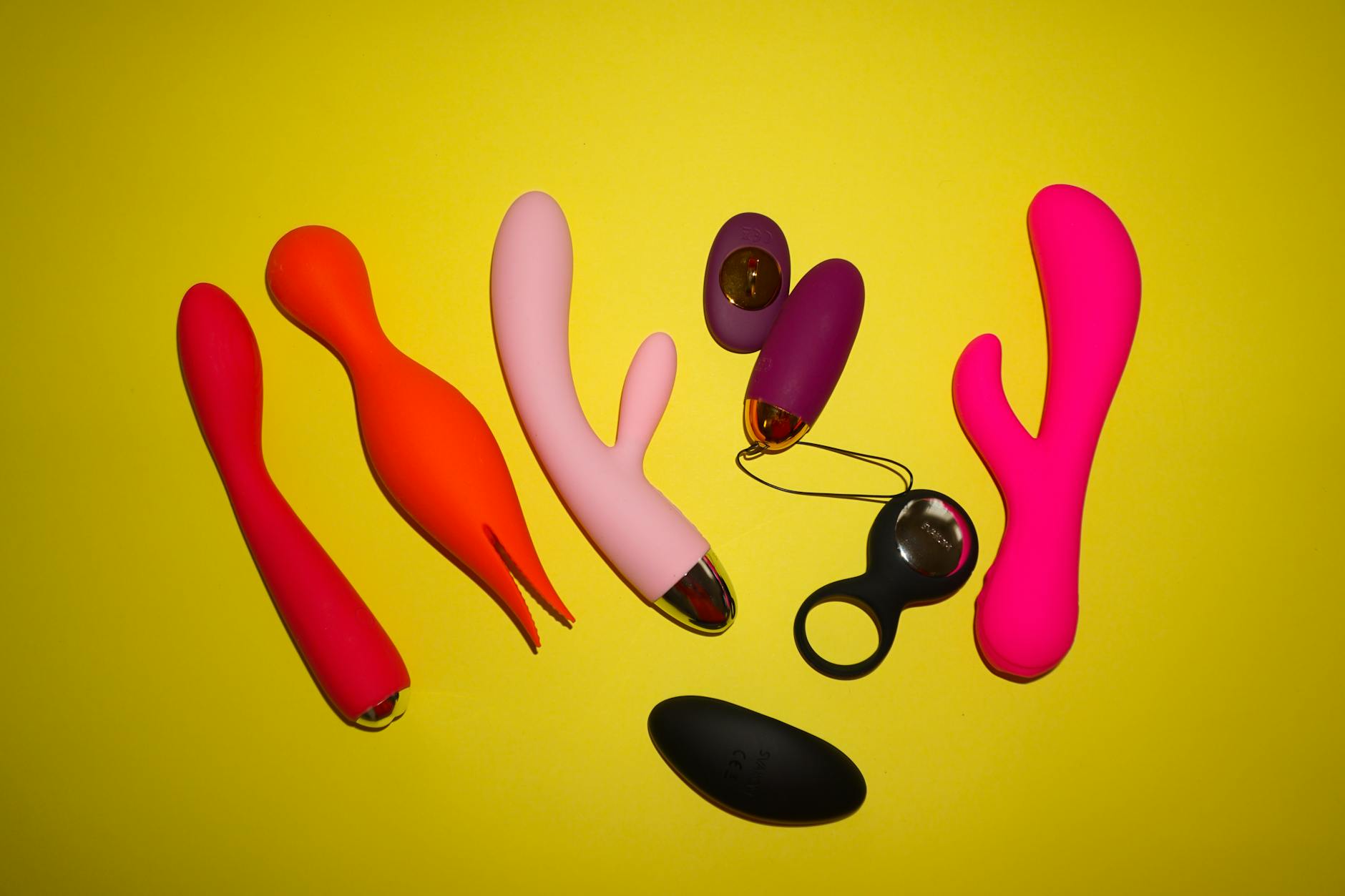
A lemon vibrator doesn't solve communication on its own. But it can be the thing that makes talking about pleasure feel less scary. It's physical proof that your partner is thinking about your body, your sensation, your pleasure. Sometimes that object in the room is easier to discuss than the feelings.
Why couples stop talking about pleasure in the first place
Most people learned about sex from sources that taught them one thing clearly: other people's pleasure is not your responsibility to discuss. In school, it was awkward diagrams. In relationships, it became easier to perform than to ask. For decades, the message was simple: don't make it weird.
Then you get partnered, and weird becomes guaranteed. Weird is showing your partner a toy. Weird is saying "I want more of this" or "that doesn't work for me." Weird is admitting you've been faking it, or that your body changed, or that you need something different now.
The irony is that avoiding the conversation creates the exact outcome everyone feared. Misalignment becomes resentment. Resentment becomes distance. Distance becomes the thing you're both trying not to name.
A clitoral vibrator like the Lem enters this space not as a fix but as a tool for naming what's been nameless. It's easier to show someone what feels good than it is to describe it from scratch.
The setup conversation (before the vibrator comes out)
If you're thinking about introducing a toy into partnered sex, the conversation actually starts before the toy arrives. Here's what I recommend:
Pick the right moment. Not in bed, not right before sex, not when either of you is tired or defensive. Pick a normal Tuesday. You're having coffee. You say something like: "I've been thinking about trying something new with you, and I want to talk about it first."
That's it. That's the whole opening. You're not asking permission or apologizing. You're naming that you're thinking about shared pleasure.
Listen for what they're actually worried about. Nine times out of ten, a partner's resistance to a vibrator isn't about the vibrator. It's about meaning. "Does this mean I'm not enough?" "Does this mean you don't want me?" "Does this mean something's wrong?" Name these out loud if they're quiet.
Your job in that moment is to say what's true: "I want more of you and more sensation. Those aren't opposites." Or "I want to know what my body can feel." Or "I want us to figure this out together."
Show them the tool. Literally. A lemon vibrator is beautiful. It's not clinical or scary. Show your partner the device. Let them hold it. Let them ask questions. Familiarity kills a lot of the nervous energy.
The first time you use it together
Don't script it. That makes it feel like a performance instead of an exploration.
What I suggest: start with manual touch. Your partner touches you, gets familiar with what your body does when they're present. No goal, no orgasm requirement, just time. Five minutes of full attention to your body.
Then introduce the toy. Hand it to your partner or hand it to yourself, depending on what feels more comfortable. Turn it on to the lowest setting. The Lem's suction mechanism is gentler than direct vibration. It means the first sensation is usually "Oh, that's interesting" rather than "That's too much."
Here's what happens next: you feel something. Your partner watches your face. Your body communicates before your mouth does. They see you flinch or exhale or shift your hips. That's information. That's the conversation starting without words.
Speak out loud: "That feels good" or "Try higher" or "Move it slightly left." Your partner needs to know that you're directing, that you're not accepting anything uncomfortable just to be polite.
Why communication during pleasure matters more than technique
Technique is teachable. Communication is transformative.
A lot of couples get stuck because they're trying to find the "right" pattern or the "correct" approach to pleasure. The Lem has different suction levels and patterns, and you might spend time trying each one. That's fine. But the real work happens when you're saying things like "That intensity works" or "I like when you pause for five seconds."
That feedback is vulnerable. You're literally directing your partner's hand toward your pleasure, and it requires you to believe your pleasure is worth directing toward. Many people have spent years not believing that. Many people still don't.
But here's what I've seen consistently: couples that can talk about pleasure during sex can usually talk about other difficult things better. The skill of saying "I want that" translates. The permission to ask for what you need translates.
When the conversation stalls
Sometimes you get to the toy moment and nothing changes. Your partner still doesn't ask questions. You still don't know if they enjoyed it. The silence persists but now there's a clitoral vibrator in the mix and it feels worse somehow, like you tried and failed.
That's the moment to step back and name it. Not in frustration. In curiosity.
"I noticed we didn't really talk about that experience. I want to know what you thought."
Your partner might say "I don't know" or "It was fine" or "I felt awkward." All of those are data. "Awkward" especially is useful. You can say "That's really normal. I felt awkward too. But I also felt like maybe there's something good on the other side of the awkward if we keep going."
You're not trying to convince them that pleasure is important. You're inviting them into a space where pleasure is something you both get to have. Where your body matters. Where their presence matters.
Practical tips for using a lemon vibrator when communication is the actual goal
Let your partner lead sometimes, especially at first. Hand them the device and let them explore your body. Surrender a little. That act of trust often opens communication faster than anything you could say.
Use water-based lubricant. It's not just comfort. It's a signal to your partner that you've thought through this, that you're taking care of your body. It normalizes the whole thing as something practical and caring rather than transgressive.
Start lower on intensity than you think. The Lem's initial settings can feel subtle, almost gentle. That's good. Subtle means you're not overwhelmed. Gentle means you can actually think about your partner's presence, feel their fingers on you, hear their breathing. That's where the real intimacy is.
Take breaks. You don't have to reach orgasm for the experience to be valuable. Sometimes breaking to just look at each other or kiss or talk is the whole point.
The weeks after
Here's what changes when couples actually use a vibrator as a communication tool rather than just an object to add sensation:
They start texting about it. "That felt really good last time when you tried the higher setting." They reference it. They build on it. They're having a conversation now, even when they're not in bed together.
They start to understand that their partner has been thinking about their pleasure. And they start to believe it's okay to think about their own pleasure too. Those two things break the silence in ways that last.
You might find that introducing the Lem actually gives you permission to talk about other things you've been holding. Sensitivity in your body. Where you like to be touched. What turns you on. What doesn't. The things you've been performing rather than experiencing.
That's the real purpose of bringing a clitoral vibrator into a relationship that lacks communication. It's not about the sensation. It's about the permission. It's about your partner saying, with an object in their hand, "I want you to feel good." And you believing them.
FAQ
What if my partner refuses to use a vibrator with me?
Refusal is information. It's usually connected to belief, not to the object itself. Your partner might believe that toys mean infidelity, inadequacy, or shame. Before you try again, figure out which one. Ask gently: "What worries you about this?" Listen without defending. Sometimes understanding the worry shifts the openness. If your partner consistently refuses despite your openness to exploring their concerns, that might signal that the communication issue is bigger than just pleasure. That's when working with a couples therapist becomes valuable.
Is there a way to bring up the idea without seeming like I'm criticizing their performance?
The frame matters completely. Don't say "I need more" or "You're not giving me enough." Say "I want to explore what my body can feel, and I'd love to do that with you." Or "I've been thinking about pleasure differently, and I want to bring you with me." You're inviting them into a shared discovery, not indicting them.
How do I know if my partner is actually enjoying the experience or just going along with it?
You ask. And you watch for the difference between genuine interest and compliance. Genuine interest shows up as questions ("What does that feel like?"), initiation ("Can we try it again?"), and feedback ("I noticed you liked that"). Compliance shows up as silence, rushed movements, or looking away. If you see compliance, pause. Ask directly: "Are you enjoying this?" If the answer is no or "sort of," that's your real starting point for conversation.
Can a vibrator actually improve communication that's been broken for years?
No. But it can interrupt a stalemate. A physical object focused on pleasure creates a different kind of conversation than words alone. It's less abstract. It's less threatening because it's directed at sensation rather than emotion. Years of communication breakdown usually need more than a toy. It needs genuine willingness from both partners to reconnect. But a clitoral vibrator can be that first crack in the silence, the thing that says "I'm willing to try something new if you are."
What if I'm using the vibrator solo and want to talk to my partner about how it felt?
Start with observation, not invitation. "I tried something that felt really different" is safer than "I want you to do this with me." You're naming your own experience first. Your partner gets to respond from curiosity rather than from feeling like they're being asked to perform. If they're curious, you can offer more. If they're defensive, you know something is blocking them and that's worth understanding before you push further.
How long does it usually take before couples feel more comfortable talking about pleasure?
It depends on how long the silence has been. If you've been together for five years without talking about sex, expect the first few conversations to feel stilted. That's normal. Most couples start to feel genuine ease after five to eight conversations where pleasure is the actual topic. Not after five uses of a toy. Five real conversations. So if you're three weeks in and it still feels awkward, you're right on schedule.
The real work is conversation
I want to be clear about something: a lemon vibrator is not a relationship repair kit. It's a conversation starter for couples ready to have a conversation. The Lem, like any clitoral vibrator, is beautiful and well-designed, but its real value in a partnership with communication gaps is this: it gives you something concrete to talk about. It gives your partner something tangible to understand about your body. It gives you both permission to think about pleasure as something worth discussing.
The actual work is showing up after the initial conversation. It's saying "That didn't feel right, let's try something else." It's asking your partner what they're thinking. It's being willing to be awkward together until awkward becomes normal.
Your pleasure matters. Your partner knowing that matters even more. A vibrator can help you say that without words. But eventually, you'll need the words anyway. Start there.