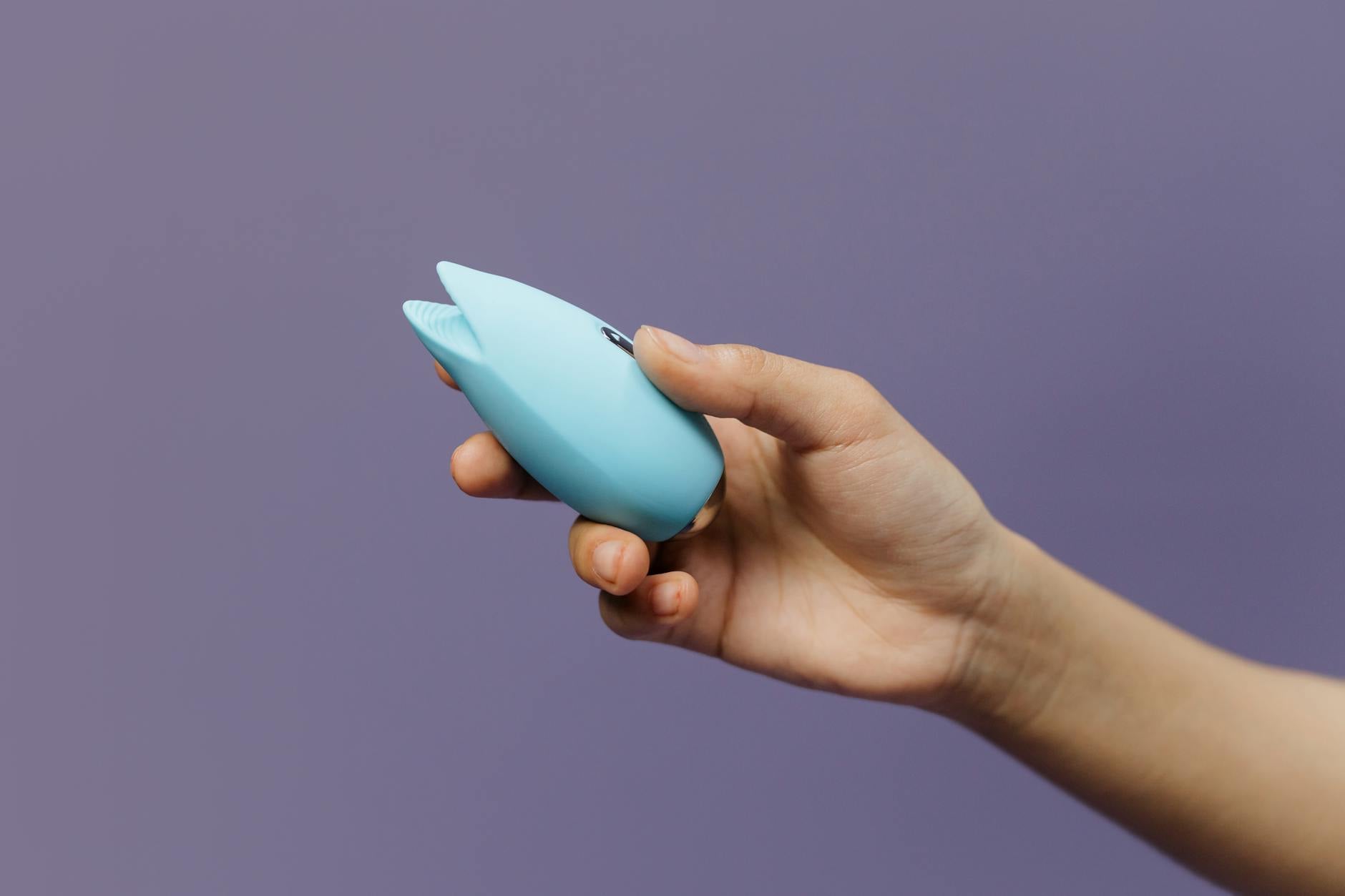
Here's what most people get wrong about arousal
We treat pleasure like a destination. You have point A (not aroused), and point B (aroused), and the goal is to get from one to the other as efficiently as possible. So you rush. You skip the warm-up, grab your lemon vibrator, turn it to the highest intensity, and wonder why nothing's happening.
Then you blame yourself. Or the toy. Or your body.
The actual problem? You skipped the part where pleasure happens.
Why rushing kills sensation
Your body needs time to catch up with your intention. When you jump straight to stimulation, your nervous system is still stuck in whatever came before. You're thinking about emails. Your pelvic floor is tense. Your breathing is shallow. Your clitoris hasn't actually woken up yet.
Physiologically, arousal happens in layers. Blood flow increases. The clitoris engorges slightly. Nerve endings become more responsive. Lubrication increases. But none of this happens instantly, and it definitely doesn't happen if you're rushing.
The research backs this up. A 2019 study in Archives of Sexual Behavior found that people who reported "slow, deliberate" approaches to sexual pleasure had significantly higher satisfaction and orgasm frequency than those who favored speed. The difference wasn't subtle.
Honestly, speed usually creates tension. Tension creates numbness. Numbness creates frustration. And then you're sitting there with a lemon vibrator in your hand, wondering if you've broken something.
You haven't. You've just skipped steps.
What patience actually does
When you slow down, three things shift.
First, your nervous system settles. You move from sympathetic (fight-or-flight) activation into parasympathetic (rest-and-digest) territory. That's not poetic language. That's literal neurology. You can't have good sensation when your body thinks there's a lion in the room.
Second, your clitoral tissue becomes actually responsive. It takes 15-20 minutes for full vasocongestion (blood flow to the genitals) to happen. Not 2 minutes. Not 5 minutes. And that's without any stimulation. Once you add the right kind of touch, you're building on a foundation instead of starting from concrete.
Third, your brain stops negotiating with your body. The part of you that's worried about time, performance, or whether you're doing it "right" finally quiets down. And that part being loud is the number-one pleasure-killer I see in my practice, across every age and relationship status.
With the Lem, the suction design actually forces this slowdown. You can't crank a suction toy to high and expect it to feel good. The tool itself teaches patience. You start at pattern 1 or 2, you let the sensation build, and by the time you're experimenting with higher intensities, your body is actually ready for them.
Building the pause before the play
I recommend a three-part warm-up, and I'm serious about this. Don't skip it.
Part one: Mental arrival. Five minutes. No toy yet. Close your eyes, feel your breathing, notice where your body makes contact with whatever you're lying on. The goal is to get your brain to actually be in the room with you, not somewhere else. That's it. That's the whole skill.
Part two: Manual exploration. Five to ten minutes. Touch yourself without the vibrator. You're not trying to orgasm. You're reminding your body what it likes. Use your fingers, your palm, the back of your hand. Pay attention to what creates a little spark of sensation. Most people skip this because it feels "inefficient," which is exactly why they're not having good orgasms.
Part three: Introduction of the Lem. Start at the lowest setting, with plenty of water-based lubricant. Don't jump immediately to the spot that felt good during manual exploration. Instead, explore around it. Let the suction build sensation gradually. You're not aiming for orgasm yet. You're waking up your nervous system.
The whole thing takes 20-30 minutes. By most people's standards, that's slow. By your body's standards, that's finally enough time.
Why presence matters more than technique
I work with couples and individuals, and I see the same pattern everywhere: people assume the problem is technique. "Am I using this vibrator right? Should I move it differently? Is there a magic angle?"
Sometimes technique matters. Usually it doesn't. What matters is that you're actually paying attention to sensation.
Presence means noticing. Not the pressure of observing yourself like you're a performance to be judged, but actual sensory attention. Where does it feel good? Is that feeling getting stronger? Do you want more pressure or less? Slower or faster? Different location?
Most people never ask themselves those questions because they're too busy trying to hit a predetermined outcome. They've already decided what should happen, and they're frustrated when their body disagrees.
Your lemon vibrator is a feedback tool, not a magic wand. It tells you what your body actually wants when you pay attention. But you have to be present enough to listen.
That's the practice. Not the technique. The presence.
When speed doesn't work, add more slowness
If you're using your Lem and sensation feels distant or numb, the instinct is to increase intensity. But intensity without presence is just more numbness, louder.
Instead, decrease intensity and increase duration. Drop to pattern 1. Keep it there for 3-5 minutes. Really notice what you're feeling. Is there any sensation at all, even faint? Can you find a breathing rhythm that goes with it? What happens if you pause the vibrator for 10 seconds, then resume?
There's a phenomenon called "sensory gating." Your nervous system gets used to constant stimulation and stops noticing it. By creating pauses, you reset that response. Your body notices the stimulation more acutely when it comes back.
If you're recovering from trauma, dissociation, medication-related numbness, or just chronic stress, this matters especially. Speed and intensity will make those situations worse. Presence and patience will slowly bring sensation back.
The partner element
If you're using a lemon vibrator with a partner, everything above still applies, but add one more layer: shared slowness.
Your partner should not be rushing either. They should be present with you, observing what you're experiencing, not performing for an audience. They can touch you while the Lem is working. They can watch. They can ask what you're feeling. They can create the environment that says: this is going to take the time it needs to take, and that's wonderful.
Most couples have never actually done this. Most couples are still operating on the "get from A to B" model. So this feels radically slow the first time. By the third time, it usually feels necessary. By the fifth time, nobody wants to go back.
FAQ: Patience, presence, and your lemon clitoral vibrator
How long should I actually spend warming up before using my Lem vibrator?
At least 15 minutes total, ideally 20-30. That includes mental arrival and manual exploration. I know that sounds long. That's how you know you're not doing it yet. Start there and adjust based on what you notice. Some days you might need 40 minutes. Some days 15 is enough. The point is you're not rushing.
What if I don't have 30 minutes? Can I still use my lemon vibrator effectively?
Yes, but shift your expectations. If you only have 10 minutes, skip the external vibration and focus on presence. Spend those 10 minutes with your hands, with breathing, with attention. A 10-minute session focused on presence beats a 2-minute session with a toy while you're mentally elsewhere. The vibrator works best when you're already warmed up.
Is it normal for sensation to feel distant even with the suction design of the Lem?
It's common, especially if you're used to wand vibrators or direct clitoral stimulation. Suction works differently. It feels like a gentle pull rather than vibration. Give yourself 3-5 sessions to adjust. And lean into slowness and presence. Most people find the sensation comes alive when they stop expecting it to feel a certain way and start noticing what it actually feels like.
Can I use my lemon vibrator in a rushed state and just accept a less intense orgasm?
Yes. Sometimes that's the reality. But if you do that regularly, you train your nervous system that pleasure is rushed, scattered, and kind of mediocre. Not great investment. Even 10 focused minutes beats 30 minutes of distracted stimulation. Your nervous system gets better at what you practice.
What does presence actually mean during solo sex?
Noticing. Not judging. Feeling where the vibrator touches you. Noticing your breathing. Noticing if your mind wandered. Gently bringing your attention back. It's the same as meditation practice. Your mind will wander a thousand times. That's not failure. Noticing it wandered and bringing it back is the practice itself.
How do I know if I'm "doing it right" with my lemon clitoral vibrator?
If you're present and you're noticing sensation (even faint sensation), you're doing it right. The outcome doesn't matter. Orgasm, no orgasm, a small orgasm, a complex orgasm. Whatever your body produces when you're actually paying attention is correct. That's your North Star. Not some external standard. Not what's supposed to happen. What actually happens when you show up present.
The shift that changes everything
I see people transform their pleasure relationship when they make this one switch: from "how do I make something happen" to "what does my body actually want right now."
Your lemon vibrator is sensitive enough to tell you. But you have to be still enough to listen. Presence creates that stillness. Patience creates the time for presence to matter. And then pleasure stops being something you chase and starts being something you discover.
That's the real game-changer. Not a new toy. Not a different technique. Just actual attention to what's happening in your body right now, in this moment, without rushing to the next one.
If you're navigating changes in pleasure, whether from age, medication, stress, or relationship shifts, slowness and presence are often where relief starts. We can work through the specific friction points together. Reach out, and let's figure out what your body actually needs.