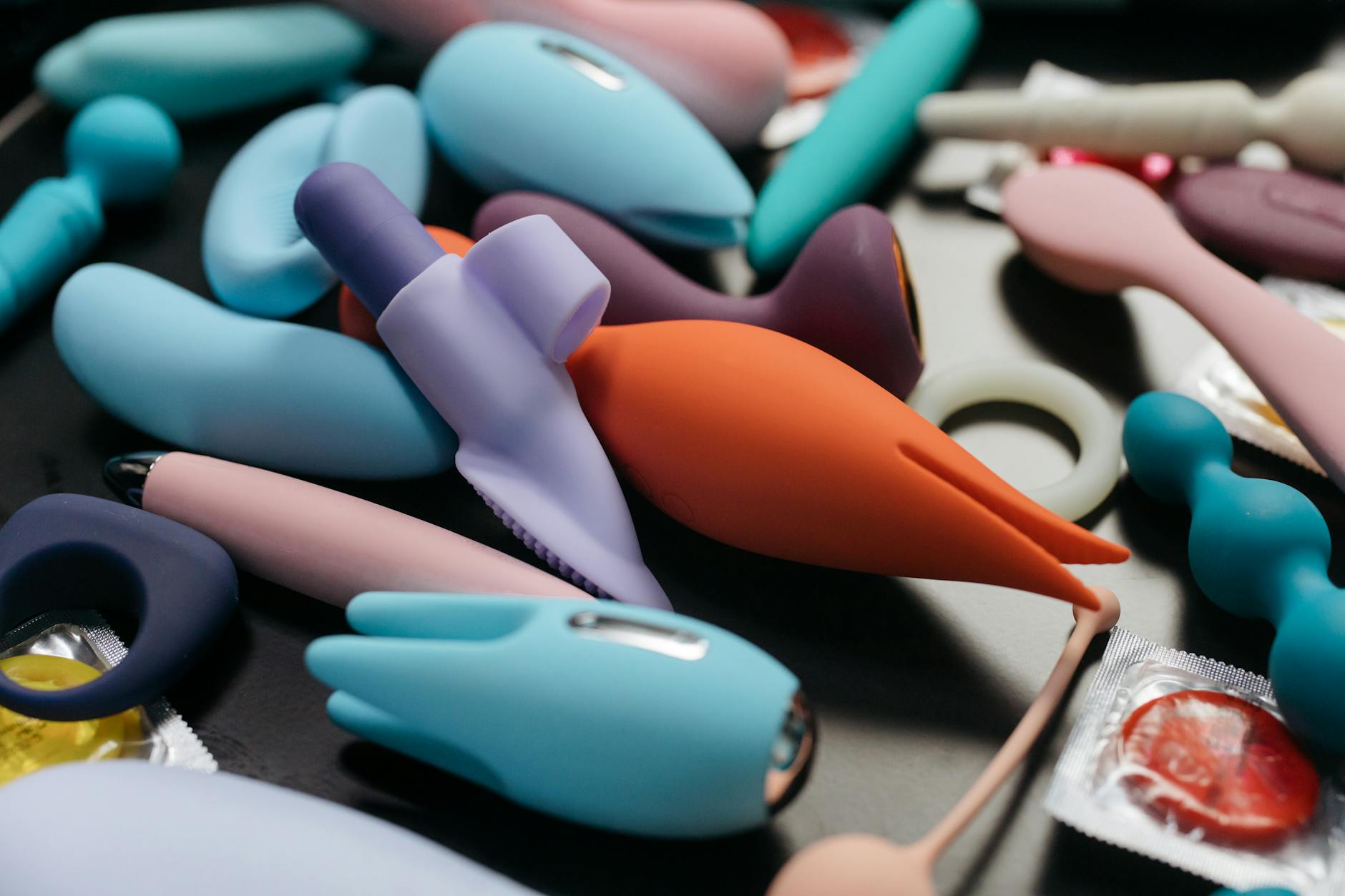
The medication-pleasure tradeoff nobody mentions
Here's the conversation that never happens at your doctor's office: your new antidepressant, antihistamine, or hormonal birth control is going to flatten your orgasm. Not maybe. Probably. And nobody tells you that's coming until you're three months in wondering why sex feels like you're touching yourself through a blanket.
Medications don't cause dysfunction exactly. They cause numbness. Your brain gets quieter, your nervous system gets slower, and the signals traveling from your clitoris to your spine to your brain arrive muffled and delayed. It's not that pleasure disappeared. It's that the volume got turned down.
The good news: you can rebuild sensitivity. It takes patience and the right tool. A lemon clitoral vibrator works particularly well for this because suction stimulation can cut through numbness in ways direct vibration can't.
Why medications numb sensation in the first place
Three main culprits show up in my clients' medication histories:
Antidepressants (especially SSRIs). Sertraline, paroxetine, fluoxetine, and their cousins work by increasing serotonin availability in your brain. But serotonin also regulates sexual response. Higher serotonin can mean lower arousal, delayed orgasm, or total orgasmic anesthesia. It's a documented side effect in 40-60% of people who take them long-term. The irony is brutal: the medication that lets you feel joy again can make pleasure feel impossible.
Antihistamines. These anticholinergic medications (including allergy meds you buy over-the-counter) dry out tissue and slow down the parasympathetic nervous system. That's the part of your nervous system that says yes to sex. When antihistamines quiet it, arousal doesn't build the way it used to.
Hormonal birth control. Synthetic hormones shift your baseline testosterone, which directly affects clitoral sensitivity and desire. Some people adapt within a few months. Others never do. The numbness can stick around as long as you're on the pill or patch.
The mechanism is real. The good news is it's not permanent.
Why a lemon vibrator works when sensation is muffled
Most clitoral vibrators use pure oscillation: side-to-side movement at a fixed frequency. That works great when your nerve endings are responsive. When they're numbed by medication, you need something that creates a different kind of stimulation.
A lemon clitoral vibrator uses suction, not vibration. The sensation is deeper and broader. Instead of a precise buzzing point, suction engages more of the clitoral network at once. It's like the difference between a spotlight and a floodlight. For someone recovering sensation, that wider net means you're more likely to feel something.
The suction also tends to be gentler than high-frequency vibration, which matters because numbed tissue can become oversensitive to direct friction. You need to rebuild sensation gradually, and a lemon sucker lets you do that without the risk of irritation.
Many clients report that suction feels "warmer" and more responsive than vibration when they're coming back from medication numbness. That warmth is your nerve endings waking up.
The rebuild protocol: how to use a lemon vibrator safely
Don't jump straight to the highest setting. The point here isn't intense orgasm. It's reconnection.
Week 1-2: Observation phase. Use your lemon vibrator on the lowest setting (usually pattern 1 or 2) for just 5-10 minutes at a time. Focus on what you feel, even if it's barely anything. Tingling? Warmth? A faint pulse? That's data. You're retraining your nervous system to register sensation. Don't chase orgasm. If it comes, great. If not, you're still succeeding.
Week 3-4: Gradual escalation. Once you've spent a couple weeks on the gentlest settings, bump up to pattern 3 or 4. Spend 15-20 minutes exploring different angles. The angle matters more than the intensity when sensation is returning. Some people find the clitoral head most responsive. Others find the side of the clitoris, or the area just above it, lights up first.
Week 5+: Integration. By now you might notice that sensation is sharper, more localized, or more reliable. You can experiment with the higher patterns, or stay where you are. The goal is to find the speed and pressure that actually registers as pleasure, not numb obligation.
If you're using a lemon sucker alongside a partner, or if you're interested in combined stimulation, read about how to use a lemon vibrator when you want internal plus external stimulation. The same principles apply.
Communication matters more than technique
If you're partnered and dealing with medication-induced numbness, the hardest part isn't using the device. It's explaining to your partner that nothing they're doing is wrong. Your body isn't broken. Your medication is doing exactly what it's supposed to do to your brain, and the sexual side effect is collateral damage.
Many partners internalize sensation loss as rejection. They think they've stopped being attractive. That's worth addressing directly and early. Show them what you're doing. Invite them to be curious alongside you. The lemon vibrator becomes a tool you're both learning to use, not a sign that your partner failed to turn you on.
If talking about it feels too vulnerable, you can start smaller: "I'm trying to figure out if my medication is affecting my body. I'm using a toy to explore that." That's true and it doesn't require a deep conversation about your antidepressant's sexual side effects if you're not ready.
When numbness doesn't lift, talk to your doctor
Sensation usually starts returning within 2-4 weeks of consistent use once your body remembers how to feel stimulation. But if you're 6-8 weeks in and nothing's shifted, or if you want to explore medication changes, schedule a conversation with your prescriber.
Don't frame it as "this med is broken." Frame it as "I want to feel pleasure again, and I'd like to talk about options." Your doctor might suggest:
- Adjusting your dose (sometimes lower doses reduce sexual side effects)
- Switching to a different antidepressant or antihistamine (some have fewer sexual side effects)
- Adding a separate medication that counteracts sexual numbness
- Timing your dose differently (some medications have less impact on sexuality if taken at different times)
None of these are guaranteed fixes. But your doctor has tools. Use them.
The bigger picture: medication, pleasure, and patience
Taking care of your mental health or managing allergies or controlling your fertility is not optional. If a medication is keeping you sane, the sexual side effect is the price of admission sometimes. That doesn't mean you have to accept permanent numbness. It means you're allowed to work on both things at once: keeping yourself healthy and rebuilding pleasure.
A lemon clitoral vibrator is a bridge tool. It reconnects your body to sensation while you figure out whether your medication is the right fit long-term. It works because it's gentle enough to use frequently without irritation, responsive enough to cut through numbness, and designed specifically for clitoral sensation.
Your pleasure matters. Even when your medication is non-negotiable, your pleasure still matters. The two can coexist.
Frequently asked questions
How long does it typically take to regain sensation after starting medication?
There's no universal timeline. Some people notice sensation returning within 2-3 weeks of consistent stimulation. Others take 2-3 months. It depends on how long you've been on the medication, how much numbness you're experiencing, and whether your body is generally responsive to sensation-rebuilding work. If you're using a lemon vibrator daily and see no change after 8 weeks, that's worth discussing with your doctor.
Can you use a lemon vibrator while still taking the medication that caused numbness?
Yes, absolutely. In fact, you should. Using a lemon clitoral vibrator while you're medicated helps retrain your nervous system to recognize and process sensation even in a muffled state. As you continue using it, and if your doctor adjusts your medication, your sensitivity might snap back quickly because your body has been practicing feeling.
Is it normal for sensation to come back unevenly?
Completely normal. Your clitoris has thousands of nerve endings, and they wake up at different speeds. You might feel sensation on the side first, or on the head, or in the area just above the clitoral body. That uneven sensation is actually a good sign. It means your nervous system is waking up in patches. Keep using the vibrator and other areas will follow.
What if my partner wants to help but I feel embarrassed about the numbness?
Start by naming the issue without shame: "My medication affects my sensation. I'm working on rebuilding that." If they want to participate, they can hand you the lemon vibrator, hold you while you use it, or simply be present while you explore. The key is making it collaborative rather than performative. You're not trying to turn them on. You're trying to wake up your own body.
Are there other ways to rebuild sensation besides using a lemon vibrator?
Yes. Sensate focus exercises (where you and a partner touch without goal of orgasm) help. Regular masturbation helps, even if it doesn't lead to orgasm. Kegel exercises strengthen the pelvic floor, which can amplify sensation. But a lemon sucker is specifically designed to provide the kind of broad, deep stimulation that cuts through medication-induced numbness most effectively. The other methods complement it.
Can you still use birth control if it's causing numbness, or do you have to switch?
You don't have to switch, but it's worth discussing with your gynecologist. Some hormonal methods cause less sensation loss than others. If you love your current birth control for other reasons, you can absolutely stay on it and use sensation-rebuilding tools like a lemon vibrator. If the numbness is a dealbreaker, your doctor can talk through alternatives: lower-dose pills, different formulations, or non-hormonal options.
Start where you are
Sensation recovery isn't about forcing intense orgasms. It's about being curious with your body, using the right tool, and giving yourself permission to rebuild pleasure on your own timeline. A lemon vibrator is specifically designed for this work. Use it gently, consistently, and without pressure. Your nerve endings are still there. They're just quieter right now.
If you want personalized guidance on how to navigate medication side effects while maintaining pleasure in your relationship, reach out to discuss your specific situation further. That's what I'm here for.