The silence between you and yourself
Years of not touching yourself is not the same thing as never having touched yourself. You know what pleasure is. You know what your body can do. But somewhere between then and now, you stopped. Maybe it was stress. Maybe a relationship consumed the space where solo pleasure lived. Maybe grief or loss made your own touch feel unbearable. Whatever the reason, now you're thinking about it again, and the thought comes with this weight.
That weight is normal. And it's not actually about the tool.
Why returning to solo pleasure feels harder than starting fresh
Here's something most articles skip: it's psychologically harder to return to something you've abandoned than to try it for the first time. When you're new to solo pleasure, there's no comparison. You don't measure yourself against a previous version. But when you've been away? Your brain has a memory of what it used to feel like. And if you're rusty, anxious, or distracted, the gap between expectation and current reality can feel like failure.
It's not.
Adding to that: if you stopped touching yourself during a relationship, during illness, or during a difficult period, your body may have learned to associate solo pleasure with something painful or with a time you'd rather forget. Your nervous system doesn't separate "not touching myself because my relationship was consuming" from "not touching myself because I was unsafe." It just knows the pattern. Restarting means gently asking your nervous system to trust again.
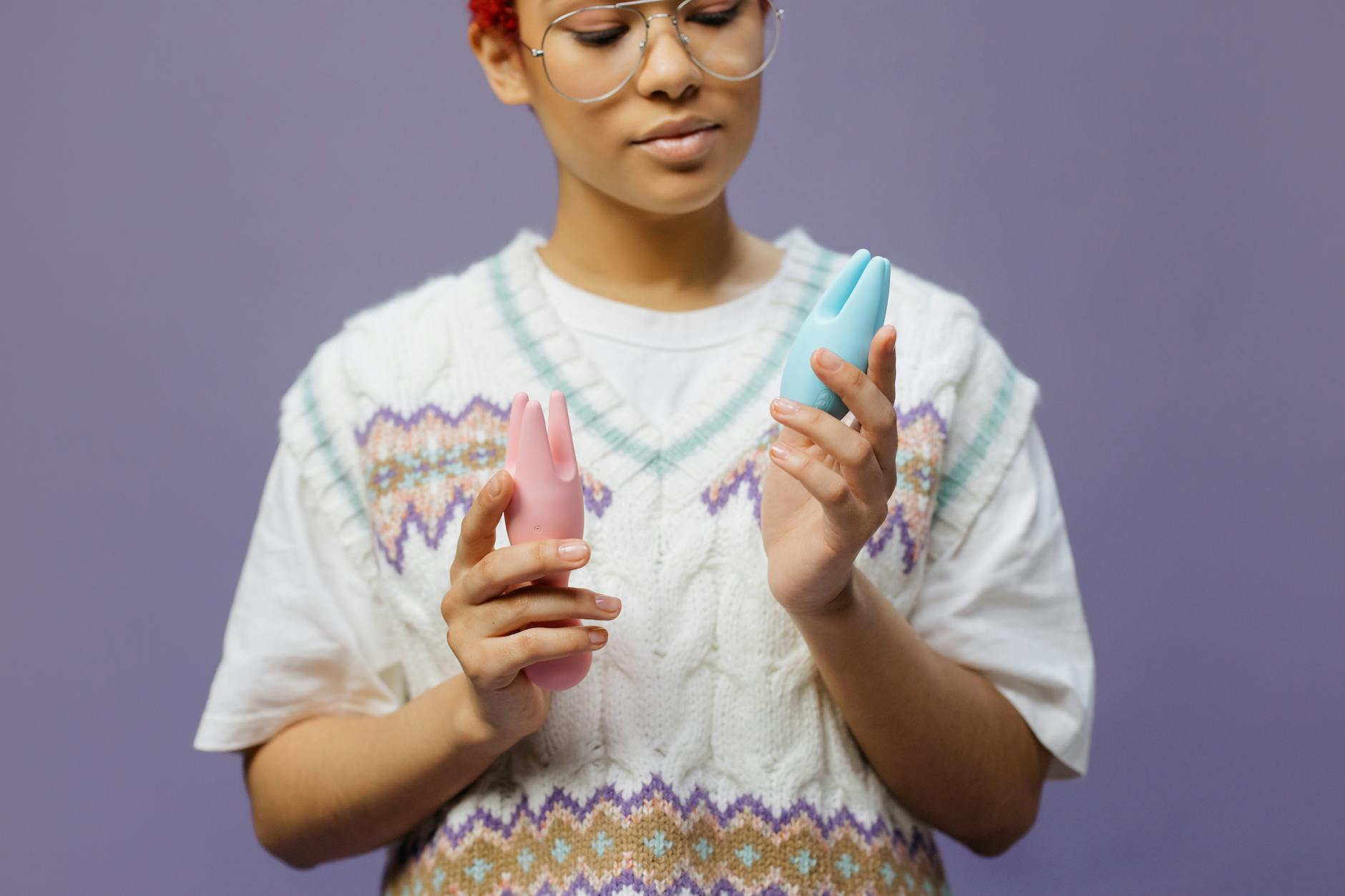
This is why a tool like a clitoral vibrator, and specifically one designed with suction rather than just vibration, can help so much. You're not relying on your own hand's rhythm or pressure. You're outsourcing the "doing" so your brain can focus on the feeling. That's the entire point.
The first conversation you need to have with yourself
Before you touch a lemon vibrator, touch yourself. Not to orgasm. Just to check in.
Stand in front of a mirror if you can. Look at your vulva without judgment. Some people haven't done this in years. Your anatomy may have changed. Your preferences might be different. That's real information, and you need it before you bring in a tool.
Then touch your clitoris slowly with a dry finger. No pressure to feel anything. Just notice: does it feel sensitive? Numb? Do you have an immediate urge to stop? Those sensations are data. They're not problems. They're your body's current language, and you need to speak it fluently before the lemon vibrator arrives.
If touching your own clitoris directly with a finger feels too intense, that's the answer your practice needs. You don't start with full pressure on a clitoral vibrator in that case. You'd start with a lemon vibrator set to the gentlest suction mode, held an inch away, letting the sensation build slowly. The suction design means you can modulate intensity by distance and by pattern choice without needing your own trembling hands to manage pressure.
Your first session with a lemon vibrator should be boring
Set an expectation: this is a data-gathering session, not a performance.
Choose a time when you have at least 20 minutes alone and your nervous system isn't already activated by stress, caffeine, or adrenaline. Take a warm shower first if that helps you feel more grounded in your body. Some people find that warm water softens the physical nervousness that shows up in the pelvic floor. Your pelvic floor will be tight if you're anxious. A warm shower or bath helps reset that.
When you're ready, lie down or sit in a position where you can rest your hand on your own body without strain. Forget about orgasm. That's not the goal here. The goal is to reacquaint yourself with what arousal feels like, what your clitoris responds to, and whether a gentle suction tool feels safe.
Start the lemon vibrator on the lowest pattern. Hold it so there's a small gap between the silicone and your clitoris. You're not pressing on yourself. You're hovering. Let the suction sensation build for 30 seconds. Notice if your breathing changes. Notice if your clitoris seems to respond. Then pause. Rest for a minute. Breathe.
If it felt good, try again with a bit closer contact. If it felt like too much, go back to hovering. If it felt numb or nothing, that's information too. Don't panic. Numbness after years of not touching yourself is common. Your sensory pathways need time to wake up.
How to pace your practice when you're starting again
The temptation is to do this daily. Don't. Solo pleasure practice, when you're returning after a long absence, works best with space between sessions. Aim for every three to four days in the first month. This gives your nervous system time to process what happened, your body time to remember what interest feels like, and your mind time to release performance pressure.
In each session, try one small variation. Maybe this time you experiment with pattern two instead of one. Maybe you add a water-based lubricant. Maybe you set a timer for 15 minutes instead of 10. One variable at a time. This isn't laziness. It's precision. You're teaching your nervous system that touching yourself is safe and exploratory, not urgent.
The nervous system piece that no one talks about
When you haven't touched yourself in years, your nervous system has a baseline assumption: this isn't safe, or it isn't available, or it isn't for you. Your job over the next month is to send gentle signals that contradict that.
Your nervous system reads: intention, consent from yourself, safety, rhythm, and completion. If you start touching yourself and stop abruptly, your nervous system registers "unsafe." If you only touch yourself when you're stressed and looking for a quick hit of dopamine, your nervous system learns that touch is about escape. If you pause, breathe, allow sensation to build without rushing, your nervous system learns that self-touch is a form of self-care.
So: set a time. Light a candle if that helps. Commit to 15 minutes, even if you don't orgasm. Even if nothing happens. Even if you feel awkward the whole time. The commitment itself is the signal. The lemon vibrator, with its intuitive suction design and graduated intensity levels, is the tool that lets you follow through without having to manage pressure manually. You're outsourcing the physical work so your nervous system can focus on the emotional work.
When orgasm doesn't happen right away
You might not orgasm in the first five sessions. You might not orgasm in the first ten. That's completely normal when you're rebuilding this relationship with yourself. Orgasm is not the finish line. Comfort is.
If you find yourself frustrated by the lack of orgasm, pause the session and ask yourself honestly: am I touching myself because I want to feel good, or because I'm trying to prove something to myself? There's a difference. One is self-care. One is self-punishment dressed up as wellness.
If it's the latter, stop. Go do something else. Come back when you're curious, not when you're desperate to prove you're still capable. Your body will respond to genuine interest. It won't respond to pressure.
When orgasm does arrive, it might feel different than you remember. It might be softer, or sharper, or concentrated in a smaller area. Your body has changed. Your nervous system has changed. That's not loss. That's just the reality of time. Honor it.
Common blocks and what they actually mean
You feel selfish. You were raised to believe solo pleasure is self-indulgent, and the guilt arrives the moment your hand moves toward your own body. This is less about your body and more about inherited shame. Reframe: solo pleasure is a form of self-knowledge. You're not taking from anyone. You're learning your own language. That's medicine.
You feel numb even with the vibrator running. Numbness usually means your nervous system is still protected. You're not actually aroused. The lemon vibrator won't fix that by itself. What helps: start without it. Spend two weeks just touching yourself with your hand, very slowly, no expectation of feeling anything. When your nervous system softens, the vibrator will feel more intense.
You feel intense grief or sadness. Sometimes returning to solo pleasure brings up emotions you didn't know were there. Years of not touching yourself isn't neutral. It often corresponds with something you were running from. If sadness shows up, let it. Stop the session. Cry if you need to. This is processing, not failure. Come back in a few days.
You feel triggered by the physical sensation. If touch suddenly feels unbearable or reminds you of something unsafe, pause immediately. This might mean you need a therapist before a vibrator. That's not weakness. That's honesty. A tool can't heal trauma. Only time and support can.
Why the Lem specifically works for returning to pleasure
A lemon vibrator designed with suction technology is specifically forgiving when you're starting again. It doesn't require you to guess at pressure. You can hold it at varying distances. It doesn't create pain from direct friction if your tissue is sensitive. And because suction works differently than vibration, it engages your nervous system in a way that feels novel and approachable.
If you've been away from solo pleasure for years, you don't need vibration strength. You need something that feels like gentle exploration. That's exactly what the lemon suction design provides.
You also don't need complexity. Single button. Three patterns. Waterproof so you can learn in the shower if you need to. The simpler the tool, the less cognitive load you carry while you're trying to reconnect with physical sensation.
The permission structure
This is the hard part that no article gives you: you need to give yourself explicit permission.
Not someday. Not when the conditions are perfect. Not when you've earned it or read enough or done enough healing. Right now, today, exactly as you are: your pleasure matters. Your body deserves touch. Your own hand, or a tool like the lemon vibrator, is not a substitute for a partner. It's not a concession. It's a practice in self-respect.
If that feels too big to say to yourself, whisper it anyway.
People also ask
How long does it usually take to feel comfortable with solo pleasure again after years away?
Every person's timeline is different, but most people report feeling genuinely comfortable (not just tolerant) within four to six weeks of consistent, gentle practice. "Comfortable" doesn't mean orgasm happens every time. It means you're not braced against the experience. You've stopped holding your breath. The nervous system has absorbed the message that this is safe. For some people, it's two weeks. For others, it's three months. There's no "should."
Can I use a lemon vibrator if I have never had an orgasm before?
Yes, absolutely. In fact, a clitoral vibrator like the Lem can sometimes be the tool that helps someone discover orgasm for the first time, because it eliminates the variable of hand fatigue or technique uncertainty. That said, don't use it with the goal of forcing an orgasm. Use it with curiosity. Follow the sensation. If orgasm arrives, great. If it doesn't, you've still gathered valuable information about what your body enjoys.
Is it normal to feel emotions during solo pleasure when I haven't done it in years?
Completely normal. Your body holds emotion. Years of not touching yourself means years of not processing whatever made you stop. When you return to that touch, grief, anger, sadness, or tenderness can surface. That's not a sign that something is wrong. That's a sign that you're doing real somatic work. Let it happen. Rest afterward.
What if I feel guilt or shame while using a lemon vibrator?
Pause and ask: whose voice is that? Is it your own authentic self saying you don't want this right now? Or is it internalized cultural shame? One is useful information. One is just noise. If it's shame, you can acknowledge it without letting it stop you. Say out loud: "I was taught this was wrong. I'm choosing differently now." Then continue if you want to. The shame will fade with repetition. You're rewriting neural pathways. That takes time.
Should I tell my partner I'm starting to practice solo pleasure again?
That depends entirely on the relationship and your agreements. Some couples find that one partner's solo practice actually strengthens the partnership. Others feel it needs to be private. There's no universal answer. What matters: make the choice for yourself first. Do this for you, not for your relationship. Once you've rebuilt your own comfort, then decide what you want to share.
Can I use the same lemon vibrator if I use it with a partner later?
Yes. Silicone toys are easy to clean between uses. Wash it with warm soapy water or a toy cleaner, dry it thoroughly, and it's ready for whatever context comes next. Your solo practice doesn't preclude partner touch. In fact, it often deepens it, because you know your own body better.
The long game
Rebuilding solo pleasure after years away isn't actually about the vibrator. It's about sending your body the message that you're worth your own touch. That your pleasure matters. That you're allowed to take up space with your own desire.
Start small. Be patient. Give yourself permission to feel awkward or numb or emotional. And if you want a tool that takes the guesswork out of pressure and intensity, a lemon vibrator with suction technology is designed exactly for this moment. For someone returning to their own body.
Your nervous system remembers how to feel good. It just needs you to be patient while it remembers you.
If you have questions about rebuilding intimacy or navigating pleasure after a long pause, reach out. Contact us anytime.