
Here's what nobody tells you
New relationships are terrifying enough without adding the question: do I mention that I use a vibrator? The stakes feel impossibly high. You're still in that phase where you're figuring out if someone can be trusted with your weird laugh, your food preferences, your family drama. And now your brain is spinning a story about whether showing up with a lemon vibrator signals that they're not enough, that you're broken, that this whole thing is going to implode.
None of that is true. But the silence around it is real, and it keeps a lot of people either hiding a central part of their pleasure or starting a relationship on a foundation of omission. Both are exhausting.
Here's what I know from two decades of working with couples: the partners who integrate their pleasure early, with honesty and without apology, are the ones who build lasting, creative, deeply satisfying intimacy. This isn't about coercion or performance. It's about showing up as a whole person from day one.
Why new relationships actually make this harder
You don't have trust yet. You're still auditioning each other. There's performance pressure, which makes vulnerability feel genuinely risky. Your nervous system is in mild alert mode for weeks, which paradoxically makes it harder to feel pleasure at all. And your brain is desperately trying to figure out if this person is safe, capable, and worth your time. Introducing a vibrator into that mix feels like an unnecessary complication.
But here's the twist: the earlier you normalize pleasure as a nonnegotiable part of who you are, the less weird it becomes. If you wait until month six to mention it, you've built an entire relationship architecture around hiding. Changing that later is harder than being honest upfront.
Starting with yourself, not with them
The first step isn't about your partner. It's about your own clarity. You need to know the difference between shame and privacy. Shame says, "I shouldn't want this, so I'll hide it." Privacy says, "This is important to me, and I'm going to share it thoughtfully with someone who's earned the right to know."
If you're feeling shame, that's a separate conversation worth having with yourself or a therapist. It's not a sign you should hide your vibrator. It's a sign you're carrying other people's discomfort in your body.
Once you've separated shame from privacy, ask yourself: does this person seem like someone who can handle knowing about my pleasure without making it weird? Not someone who will think you're weird. Someone who can hear "I use a clitoral vibrator because it helps me know what I want" without turning it into something it isn't.
If the answer is no, that's actually useful information. It tells you something about whether this relationship is going to be able to hold you.
The conversation, step by step
Timing matters. Don't spring this on someone right after you've met, and don't wait until you're already having sex. Somewhere in weeks 2-5, when you're comfortable enough to have real conversations but before intimacy becomes imminent, is the sweet spot.
The setup: pick a moment when you're both relaxed and there's no performance pressure. Not during sex, not in the middle of an argument, not when you're both rushing somewhere. A quiet evening at home, or a walk, or somewhere you can actually talk.
The opener: "I want to talk about something that matters to me, and I'm doing it now because I respect you and this, and I don't want to hide parts of myself." Then pause. Let them breathe.
The substance: "I use a vibrator. It's something I enjoy, and it's important to my wellbeing. I'm telling you because I want you to know me fully, not because I'm asking you to do anything differently right now. I just want this to not be a secret."
That's it. You're not asking for permission. You're not explaining away your sexuality. You're not making it about whether they're enough. You're stating a fact about who you are.
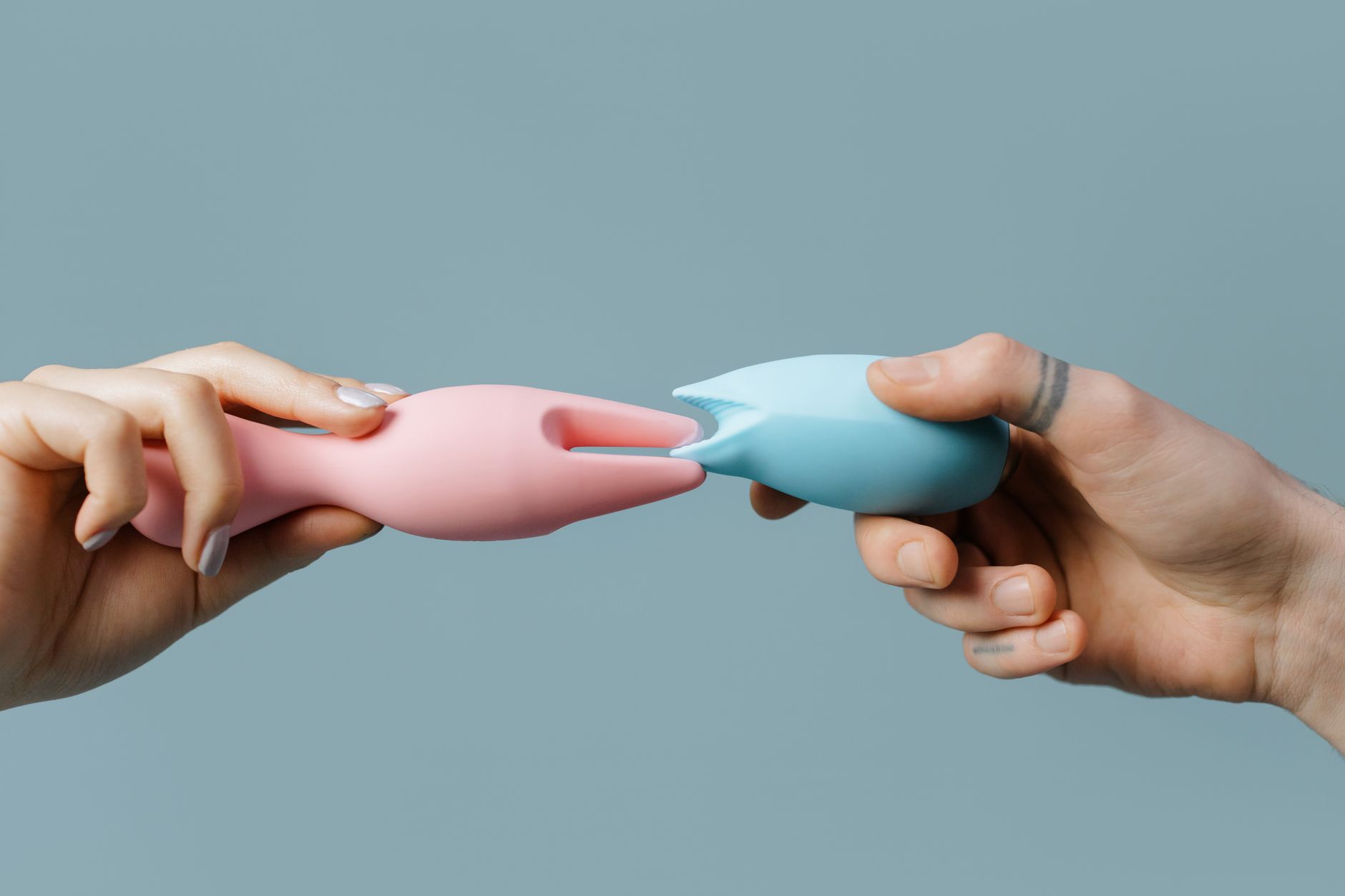
Photo by cottonbro studio on Pexels
What they might say (and how to respond)
"Does that mean I'm not enough for you?" This is fear talking. The response is gentle but clear: "No. This is about me knowing my own body. Plenty of people use vibrators with partners they love. It's not about replacement. It's about different sensations."
"Cool, I'm into that." Great. You get to have fun conversations about how this might integrate into your intimate life when you're both ready. This is the best-case scenario.
"I'm not sure how I feel about that." That's honest and fair. You can say, "That makes sense. You don't have to figure it out right now. It's just part of who I am." Then give them space to process. Some people need time.
Defensive or judgmental responses. If someone makes you feel ashamed for knowing your own pleasure, that's information about them, not about you. This is when you get to decide if this person is capable of the emotional maturity a real relationship requires.
Most people surprise you. They'll either be fine with it or they'll work through their feelings like a mature adult. A small number won't be able to. That's their limitation, not yours.
If you move toward intimacy together
Once the initial conversation has happened and you've both settled into it, the next phase is easier. You're not hiding anymore. The secret is out.
When you're actually intimate, you have options. Some new couples enjoy exploring a lemon vibrator together, which can feel playful and removing pressure from performance. A clitoral vibrator like the Lem can actually help early-stage couples because it takes the pressure off your partner to "do it right." It shifts the dynamic from "Can you make me come?" to "Here's what I like, and I get to direct this." That's incredibly powerful.
Other couples keep their solo pleasure solo for a while, and that's fine too. The point isn't that you have to use your vibrator with them. The point is that you're not pretending it doesn't exist.
What often happens is this: after a few months, curiosity emerges naturally. Your partner might ask to watch, or to incorporate it into partnered sex, or to understand better what you like. That's how real exploration works. It's not choreographed. It's collaborative.
The longer conversation about desire
This early disclosure actually opens the door to something deeper: talking about what you like, what feels good, what you want to try. Most couples never have this conversation clearly. They hint. They guess. They read articles. They wonder. And meanwhile both people are privately struggling with insecurity and misalignment.
You get to be the person who changes that by saying, "I know what I like. Here it is. What about you?" That's not selfish. That's the foundation of good sex, and it usually leads to better intimacy overall.
If you're genuinely stuck about how to navigate this, or if you realize your partner responds with shame or manipulation, that's worth paying attention to. Early-stage discomfort is normal. But early-stage judgment about your sexuality is a yellow flag.
The practical side: when and where
Once the conversation happens, you get to decide when you use your vibrator. You might solo before dates, which settles your nervous system and helps you feel more grounded. You might use it alone on nights when you're not together. You might eventually integrate it into partnered sex.
Privacy matters. If you're sleeping at someone's place, it's fair to keep your toys somewhere discrete. You don't need to hide them, but you also don't need them front and center. This is about respect, not shame.
Communication matters more. "I'm going to take some time for myself tonight" or "Do you want to explore this together?" are both totally reasonable things to say to someone you're building intimacy with.
FAQ: The questions people actually ask
Q: What if they ask to use my vibrator? A: That's your choice. You can say yes, you can say no, you can say "maybe not yet." Your toys are yours. But most people are fine sharing eventually, especially if you've built trust. If hygiene is your concern, just say that. "I'd love to, let's get you your own." Most partners don't mind.
Q: What if they want me to use it instead of having sex with them? A: This is where communication gets real. A partner pressuring you to use a vibrator instead of partnered sex is a red flag. But a partner occasionally saying, "Want to use that tonight instead?" when they're tired or you're not aligned? That's normal. Context matters enormously.
Q: Isn't this moving too fast? A: Talking about pleasure honestly is not moving too fast. Moving too fast is assuming things without asking, or building resentment over unmet expectations. Honesty actually slows things down in the best way. You get to see if this person can handle maturity early.
Q: What if I'm embarrassed? A: Embarrassment is real and valid. It also usually passes in about 30 seconds once you've said the thing out loud. The relief on the other side is worth the brief discomfort.
Q: Should I bring my vibrator to their place early on? A: Not necessarily. Keep it at yours until you're more established. When overnight visits become regular, then you're thinking about what makes sense for your space.
Q: What if they've never heard of a lemon vibrator or clitoral vibrator before? A: Perfect. You get to educate them in a casual way. "It's a vibrator designed for clitoral stimulation, uses suction rather than vibration, really popular, feels different." Simple. Matter of fact. Not a lecture.
The bigger picture
Starting a new relationship is the perfect time to set the tone: this is someone I'm being fully honest with. This is someone I trust with my real self, including the parts that feel vulnerable. This is someone who can handle maturity.
That foundation changes everything about how the relationship develops. It removes shame. It opens conversation. It makes you feel less alone in your own body.
Your pleasure is not something to apologize for. Your vibrator is not a threat to your relationship. And your partner's capacity to hear about both of those things is actually one of the best early indicators of whether they're worth your time.
If you want more support navigating intimacy and communication in new relationships, we're here to help. Reach out anytime at /contact.