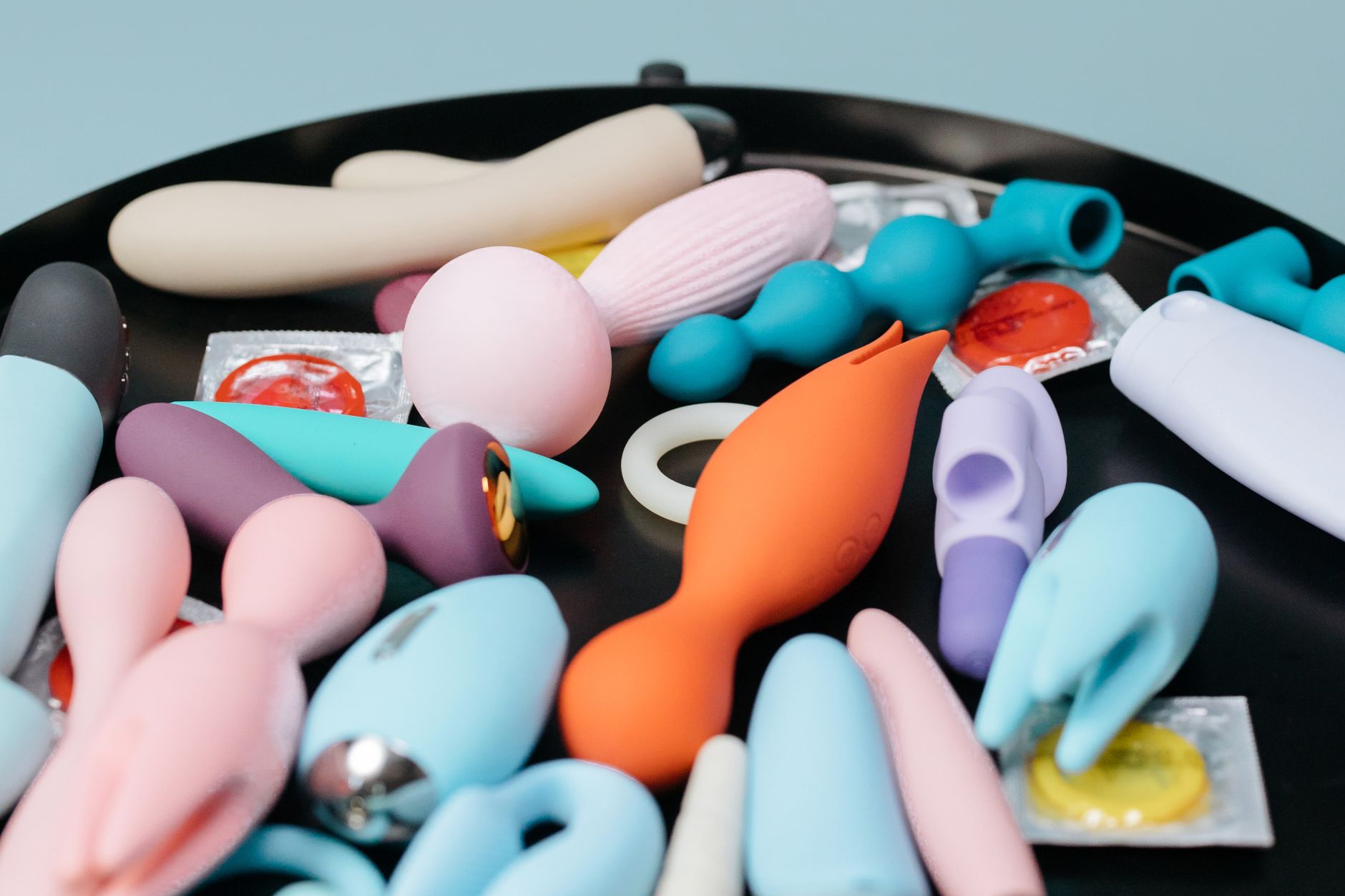
Here's what nobody tells you about sensation and repetition
You bought your lemon vibrator and loved it. Three months in, it still works perfectly. But somehow, the intensity that made you gasp at the beginning now feels like background noise. So you turn up the power. Then you're thinking about adjusting intensity settings every time you use it, chasing the same sensation you had before.
This is real. It's neurological. And it's completely fixable.
What's happening in your nervous system
When you use any clitoral vibrator repeatedly, your sensory nerves go through a process called habituation. Your brain stops treating the stimulus as novel. It's the same reason you stop noticing the hum of your refrigerator after a week, or why a tight waistband feels normal by noon.
Your clitoris has around 8,000 nerve endings concentrated in its glans. These nerves are exquisitely sensitive to novelty. When the same pressure, pattern, and frequency hit them night after night, they literally downregulate. The sensation doesn't disappear. Your nervous system just stops waving its hand in your brain's face about it.
This isn't weakness. This is your body being efficient. Which is annoying when that efficiency kills your orgasm.
The good news: unlike some pharmaceuticals or behaviors, vibrator habituation is reversible. You don't need a new toy. You need a reset.
Why this happens faster with some people than others
Three factors make you more prone to sensation decrease:
1. Frequency of use. If you're using your lemon vibrator multiple times daily, you'll habituate faster than someone using it 2-3 times weekly. There's a dose-response relationship. More stimulation equals faster tolerance buildup.
2. Variation in patterns. If you use the same pattern every single session, your nerves adapt to it like a song you've memorized. People who cycle through different settings and patterns stay sensitive longer.
3. Individual nervous system baseline. Some people's sensory systems are naturally higher threshold (they process stimuli as less intense overall). Others have lower thresholds and experience everything more vividly. Genetics and prior experience matter.
None of this means you're broken. It means your body is working exactly as designed.
The lemon vibrator sensitivity reset: four proven approaches
These strategies work because they interrupt the habituation loop by introducing novelty back into your nervous system.
Reset strategy #1: Take a break
Simplest and often most effective: stop using any vibrator for 2-4 weeks. Not forever. Just long enough for your nerve endings to downregulate back to baseline sensitivity.
Plan this. You'll have withdrawal FOMO for about 3 days. Then something interesting happens around day 10. You notice sensations you'd forgotten existed. A touch on your thigh. The feeling of different fabric. Your nervous system's volume gets turned back up.
When you return to your lemon vibrator after a 3-week break, the intensity will feel completely different. Newer. Alive again.
The trade-off: this requires patience. If you're looking for a solution today, this won't work.
Reset strategy #2: Vary your patterns obsessively
If you're not willing to take a break, change patterns every single session. Don't use the same setting twice in a row. Start with pattern 2. Next time, pattern 5. Then pattern 1.
Your nervous system stays engaged when it's surprised. The clitoral suction lemon vibrator has seven distinct patterns. Use them. Rotate them. Mix intensity with different patterns.
This is why partners asking you to switch things up during sex isn't annoying micromanagement. It's actually sensory wisdom.
Reset strategy #3: Introduce manual touch alongside vibration
Your clitoris has multiple types of nerve fibers. Some respond to vibration specifically. Others respond to pressure, temperature, and texture. When you use only vibration, you're activating one channel. Add other sensations and you light up the whole map.
Try using your lemon vibrator with simultaneous manual touch on your thighs, lips, or breasts. Or use a toy for 2-3 minutes, then switch to manual touch. This cross-modality stimulation keeps your nervous system from settling into a single feedback loop.
Reset strategy #4: Try lower frequencies with longer sessions
Many people assume they need higher intensity when sensation drops. Actually, lower intensity with longer sessions often feels more intense over time because you're building arousal gradually instead of hitting peak stimulation immediately.
Start at pattern 1. Spend 15-20 minutes there before you ever consider moving up. Let your arousal accumulate. Many people skip this because they're chasing the quick hit. But for people dealing with decreased sensation from the lemon vibrator, slower builds feel revelatory.
The role of daily life in your sensitivity
Vibrator habituation doesn't happen in isolation. Stress, sleep, hormones, and medication all modulate baseline sensation.
If you're sleep-deprived, your nervous system's threshold for pleasure goes up. You literally feel less. If you're in high stress, same thing. Cortisol mutes sensation in your periphery as your nervous system prioritizes survival.
So before you blame your lemon vibrator, audit your life. Are you sleeping 6-7 hours? Drinking enough water? Managing stress? These aren't separate from pleasure. They're the foundation it sits on.
If your sleep is bad, no amount of pattern variation will fully restore sensation. The nervous system needs baseline resources.
When you might actually need a different toy
Not everyone. But some people who feel their lemon vibrator losing intensity actually want novelty in texture and form, not just frequency.
If you've been using the same clitoral vibrator for 2+ years and you've tried all four reset strategies, a different toy might genuinely feel fresher. Not because there's anything wrong with your first toy, but because your nervous system responds to newness.
When this happens, people often gravitate toward toys with different sensations. If you've been using air-suction clitoral vibrators, trying a traditional vibrator creates novelty. If you've been using high-frequency patterns, a wand with lower frequency but higher pressure feels completely different.
The mental component you can't ignore
Here's something nobody talks about: pleasure habituation has a psychological layer too.
When your lemon clitoral vibrator was new, there was curiosity. Exploration. A little edge of not knowing exactly what would happen. After 50 uses, that's gone. You know exactly what intensity 3 on pattern 4 does. Your nervous system knows. Your brain knows.
Some of the sensation loss is neurological. Some is psychological. You're no longer discovering. You're repeating.
One way to address this: reintroduce intentionality. Use your vibrator with attention instead of autopilot. Different setting than usual. Different location. Partner present or not present. Different time of day. Small variations that interrupt the automatic script your brain has written.
What NOT to do
Don't assume you need to upgrade to a more intense toy every time sensation decreases. You'll end up on a treadmill where you're constantly seeking the next stronger device, and your baseline sensitivity just keeps dropping.
Don't blame yourself. This isn't weakness or proof you're broken. It's how human nervous systems work. Everyone with a clitoris experiences this if they use the same vibrator the same way long enough.
Don't use multiple vibrators simultaneously thinking more stimulation equals more sensation. It's actually the opposite. Your nervous system habituates faster to combined stimuli because it's an even stronger sustained signal.
Getting back to sensation that matters
Your lemon vibrator isn't broken. Your nervous system isn't damaged. You've just reached the point where repetition has become invisible to your body.
Start with one of the four reset strategies. Most people see changes within 1-2 weeks. If you take the break route, you'll feel it on day 15. If you're mixing up patterns daily, you should notice shifts within the first week.
Pleasure should feel good, not like work. If you're spending every session frustrated that your toy doesn't feel like it did before, that's worth fixing. And it is fixable.
People also ask
Do all clitoral vibrators cause desensitization over time?
Yes. Any repeated sensory stimulus causes habituation eventually. But some toys contribute to it faster. High-frequency vibrators with unchanging patterns habituate quickly because they're maximally stimulating from the start. Toys with multiple settings and patterns (like the lemon vibrator) let you vary stimulus and slow habituation significantly.
Is vibrator-induced numbness permanent?
No. Your nerve endings aren't permanently damaged. Habituation is entirely reversible. A 2-4 week break or consistent pattern variation restores baseline sensitivity in most people. The longest I've worked with someone experiencing desensitization took 6 weeks of breaks and pattern rotation before sensation fully returned.
Can you use lube to increase sensation if you're feeling numb?
Sometimes, but usually not because of desensitization specifically. Lube helps if your tissues are dry, but if the issue is neurological habituation, lube won't restore novelty to your nerve endings. Better to address the habituation directly through breaks or variation.
Should I switch to a different type of clitoral stimulation?
Yes, if you want to interrupt habituation. If you've been using vibration exclusively, switching to suction-based stimulation or manual touch for a few weeks can reset your sensitivity to vibration. Your nervous system responds to contrast.
How often is it safe to use a lemon vibrator without building tolerance?
There's no magic number, but 2-4 times weekly with pattern variation usually allows your nervous system to stay sensitive longer than daily use with the same setting. If you want maximum sensation retention, vary your frequency. Some weeks daily, some weeks a few times. This inconsistency (which feels chaotic) is actually optimal for your nervous system.
If I reset my sensitivity, will I have to take breaks forever?
Not necessarily. Once you understand the principle, you can stay ahead of habituation through simple variation. Most people find that rotating patterns, changing frequency, and mixing in manual touch prevents major desensitization. You don't need perpetual breaks if you're strategically inconsistent with how you use your toy.
Your pleasure matters. So does the joy of genuine sensation. Getting both back is entirely possible.