Here's the thing about birth control and pleasure
Your birth control method is quietly reshaping your arousal. Not in a dramatic, obvious way. More like a slow drift that you might chalk up to stress or relationship fatigue when it's actually your hormones doing their job. The problem is that most information about hormonal contraception stops at pregnancy prevention. Nobody talks about how it tilts the scale on desire, response time, and which kinds of stimulation feel best during different weeks.
I see this pattern constantly with clients. A woman switches from the pill to the copper IUD and suddenly finds her arousal needs more buildup. Someone else starts a progestin-only pill and notices their orgasm feels less intense in the first half of the pack. These aren't dysfunctions. They're signals that your nervous system needs a different approach. And lemon clitoral vibrators, with their unique suction technology, are weirdly well-suited to adapting to these shifts.
What birth control actually does to arousal
Hormonal contraception works by suppressing your natural cycle or, in the case of the copper IUD, preventing fertilization without hormones. But when you're on the pill, the patch, the ring, or a hormonal IUD, your estrogen and progesterone levels stay roughly flat instead of rising and falling across your cycle. This is effective contraception. It's also a significant change to your neurochemistry.
Estrogen is not just a fertility hormone. It's involved in dopamine production, serotonin sensitivity, and blood flow to genital tissue. When estrogen dips (even though you're still getting synthetic hormone coverage), arousal can feel muted. Some people describe it as needing more time to warm up, or finding that spontaneous desire has mostly vanished.
Progesterone (whether natural or synthetic) can dampen arousal directly. That's why some people on higher-progestin pills report lower libido, while others on estrogen-dominant formulations feel fine. The copper IUD, which releases no hormones, usually preserves your natural cycle entirely. But it can intensify cramps and pelvic tension, which changes what kind of stimulation feels good.
The underlying shift is always the same: your body needs different activation.
Why suction-based lemon vibrators help
Bullet vibrators and wand vibrators work by friction and pressure. They're designed to deliver predictable stimulation regardless of tissue sensitivity or arousal state. That's their strength. But when your hormones are flattening your arousal response, you often need something that wakes up sensation rather than relying on raw intensity.
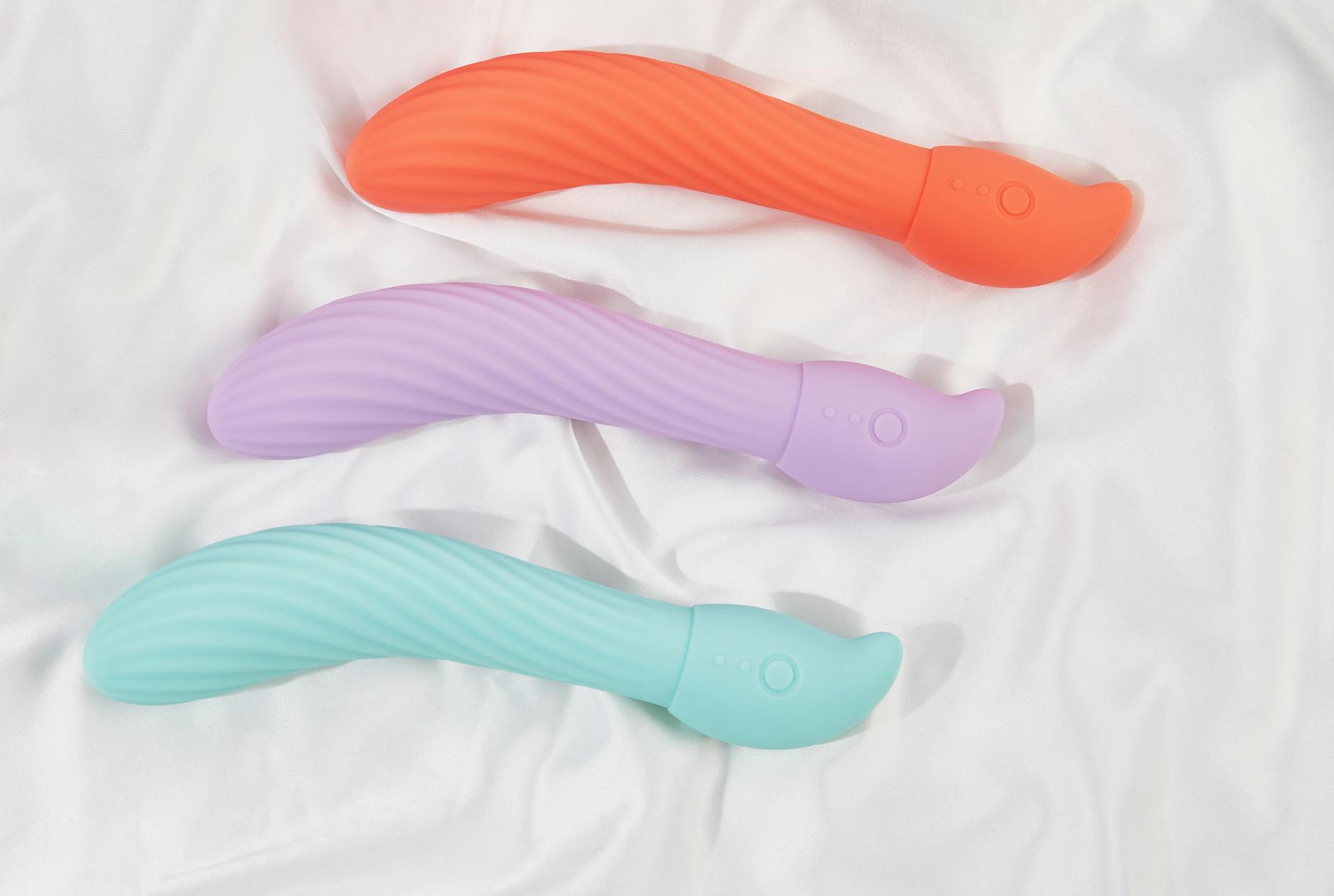
Clitoral suction toys like the Lem vibrator use air-pulse technology that stimulates the clitoris indirectly, through the surrounding tissue and nerve clusters. This approach is gentler on the initial engagement, which matters when your arousal is slower to build. You can start at a lower intensity setting and feel sensation immediately because the suction creates a distinct physical experience separate from vibration alone. It's not just buzzing. It's sensation.
People on hormonal birth control often report that suction-based lemon vibrators work faster than traditional vibrators. The reason is neurological. Suction activates different nerve pathways than vibration, and those pathways are less dependent on the baseline arousal level you're starting with.
Timing within your cycle or pack
If you're on a cyclical hormonal contraceptive (the standard 21-day pill pack, the patch, or the ring), you still have a weekly rhythm, just a flatter one than your natural cycle. Your body gets a small estrogen surge when you start a new pack. You get a hormone drop during your pill-free week. These changes are smaller than a natural cycle, but they're still there.
Some people find their arousal easiest to access right after starting a new pill pack, when estrogen is highest. Others find the pill-free week is their window. If you notice this pattern, it's worth planning. That doesn't mean you can only use a lemon vibrator during certain weeks. It means that if you're struggling to feel pleasure mid-pack, you might have better luck with slightly longer warmup and a lower starting intensity on the Lem. Then, when you hit your high-estrogen window, you might find you can jump straight to intensity level 3 or 4.
With the copper IUD or the progestin-only pill, you're preserving most of your natural cycle (the copper IUD entirely, the progestin-only pill partially), so this weekly pattern is much stronger. Pay attention to where you feel easiest arousal, and notice whether your favorite Lem intensity level shifts.
The pelvic floor piece most people miss
Hormonal birth control affects pelvic floor tone. Lower estrogen means less collagen production in pelvic tissue, which can lead to subtle tightness and reduced blood flow. You might not feel a conscious difference, but your pelvic floor might be working harder than it used to, which means it fatigues faster and makes orgasm harder to reach.
This is where the indirect stimulation of a lemon vibrator becomes clever. By activating sensation through suction rather than direct pressure, you're not fighting against pelvic floor tension. You're working around it. Many people find that using a suction toy at a lower intensity actually relaxes the pelvic floor over time because there's less need to brace against overwhelming sensation.
If you're also dealing with hormonal birth control, consider pairing your Lem vibrator sessions with some basic pelvic floor release work. That might sound clinical, but it's simple: take 60 seconds to breathe into your belly, mentally soften your pelvic floor, and let your body drop into relaxation before you start. You'll feel the difference immediately.
Communication if you have a partner
This is important and often overlooked. If your birth control has shifted your arousal, your partner probably doesn't know that it has nothing to do with them or attraction. They might interpret slower arousal as lower desire, or think they're doing something wrong. You're not. Your body is just operating under different neurochemical rules.
The kindest thing you can do is name it plainly. "My birth control makes arousal slower to build, so I need more time before things feel good." Then, if you're using a lemon clitoral vibrator, you might say something like, "I'd love it if we could start with this, because it helps me warm up faster." A lot of partners actually find this easier than assuming or guessing.
There's also the reverse situation: some birth control methods increase libido or sensitivity. If that's you, your partner should know that too. It's not random. It's hormones doing their job.
Switching methods or brands of birth control
If you change your contraception, expect a 2 to 4 week adjustment period before your arousal patterns settle. Switching from a high-estrogen pill to a low-estrogen pill, or switching to an IUD, will shift something. Your clitoral sensitivity might change. Your ability to have multiple orgasms might shift. Your baseline arousal state might dip or spike.
During this adjustment window, I recommend backing off the intensity on your Lem. Start at lower settings and work your way back up. This isn't because you've broken anything. It's because your nervous system is recalibrating, and starting gentle lets you feel what's actually happening without overwhelming sensation.
Within 4 weeks, you'll have a clear sense of how your new method affects arousal, and you can fine-tune your lemon vibrator use accordingly.
When to talk to a doctor
If your birth control has tanked your libido completely and nothing is helping, that's worth raising with a GP or gynecologist. Some progestin formulations genuinely suppress desire in ways that don't resolve, and switching to a different contraceptive (lower progestin, estrogen-dominant, or non-hormonal) can transform the experience.
If you develop pain during sex after starting a new birth control, don't wait. That's a sign to loop in a doctor. Some hormonal IUDs can cause tissue atrophy if the hormones aren't balancing right for your body, and that's a fixable problem with the right support.
Use a lemon vibrator as a tool to explore what's working. Use a doctor as a backup if the tools aren't enough.
FAQ
Does the copper IUD affect arousal differently than the pill?
Yes. The copper IUD preserves your natural hormone cycle, so your arousal patterns stay roughly the same as they were before. What changes is usually mechanical: heavier periods and stronger cramps, which can make pelvic tension more noticeable. If you're dealing with cramping, a suction-based lemon clitoral vibrator is gentler on tender tissue than a traditional vibrator, and some people find it helpful for tension release even outside of sexual contexts.
Can birth control make orgasms impossible?
No. But some formulations make orgasms harder to reach because they lower arousal overall or increase pelvic floor tension. It's not a you problem. It's a hormonal mismatch. If you've tried a clitoral vibrator like the Lem and orgasm is still out of reach after a few weeks, that's genuinely worth discussing with a doctor. You might benefit from a different contraceptive.
What birth control method has the least impact on arousal?
The copper IUD typically has the smallest impact on arousal because it doesn't release hormones and doesn't suppress your cycle. Some people feel no change at all. That said, it can amplify cramping, which indirectly affects pleasure. The progestin-only pill (the mini pill) preserves some of your natural cycle and has less impact on libido than combined pills, but it varies person to person. If arousal is a priority, it's worth testing a method for at least a full cycle before deciding it's not working.
Should I stop using a lemon vibrator when I'm on birth control?
Absolutely not. If anything, a suction-based lemon vibrator becomes more useful when your arousal is flatter. It's actually a great tool for learning how your body responds under hormonal contraception. You'll figure out your preferred intensity levels, timing, and warmup needs faster than you might otherwise.
Does using a vibrator affect how well birth control works?
No. Using a lemon clitoral vibrator has zero impact on contraceptive efficacy. It doesn't change your hormones, doesn't disrupt the mechanism of an IUD, and doesn't make the pill any less effective. Pleasure and contraception are independent.
Will my arousal go back to normal if I stop birth control?
In most cases, yes. It usually takes 1 to 3 months for your cycle and arousal patterns to normalize after stopping hormonal contraception. If you've gotten used to using a lemon vibrator on lower intensity settings, you might find you need to recalibrate once your natural cycle returns. That's a good thing. It means your arousal is coming back online.
The real story
Birth control is a profound medical choice, and arousal changes are just one piece of that. But they're a real piece, and acknowledging them isn't ungrateful or dramatic. Your body is adapting to a consistent hormonal environment, and it makes sense to adapt your pleasure toolkit to match that reality.
A lemon vibrator, with its gentler initial engagement and indirect stimulation, is weirdly perfect for navigating the slower arousal that often comes with hormonal contraception. Start low, pay attention to what feels good during different weeks, and give yourself permission to ask for what you need from a partner or from yourself. Your birth control method is working. So can you.