
The weird feeling when pleasure starts waking up again
Depression doesn't just sadden you. It locks pleasure away entirely. Food tastes like cardboard. Music becomes background noise. And sex feels like a foreign concept, something other people do, not you. That numbness is neurochemical and real, and it's not laziness or disinterest. It's your brain protecting itself.
Then one day, depression starts to lift. And suddenly you're supposed to want sex again. Except you don't know how. Your body feels unfamiliar. The thought of touch, even self-touch, can trigger shame or confusion. You've been asleep for months or years, and now people want you to just switch it back on.
Here's what I tell people in this exact position: desire doesn't come roaring back. It tiptoes in. And you need permission to move at that speed.
Why desire disappears during depression (and takes time to return)
Depression alters dopamine and serotonin. Those chemicals don't just regulate mood. They control reward, motivation, and arousal. When depression flattens your brain chemistry, pleasure pathways literally go offline. This isn't a choice or a reflection of your sexuality.
When medication or therapy or both start working, neurochemistry shifts gradually. Motivation returns before pleasure. You'll want to shower before you want to feel good in your own skin. You'll want to eat again before food tastes like anything. And sexual desire arrives last on that hierarchy, often weeks or months after other systems reboot.
That delay is normal. That discomfort with your own body is normal. That fear that you've lost interest forever is almost always temporary.
The three emotional blocks that show up first
Shame about the gap. You missed months of intimacy with a partner, or you lost touch with solo pleasure entirely. That time is gone. The guilt of it can feel massive. The truth: your partner who loves you isn't keeping score. And if you were alone, you survived the depression. That's enough.
Fear that sensation won't come back. It will. Depression doesn't kill your nerve endings. It just mutes the signal. As your brain rebalances, sensation returns in layers. You won't feel everything all at once, and that's okay.
Uncertainty about whether you want it. This one deserves space because it's legitimate. Sometimes depression shifts into a period where you genuinely don't know if you want sex, or a partner, or touch at all. That's not broken. That's you figuring out who you are now. Don't rush it.
How to start if you're using a lemon vibrator or any clitoral toy
First: touch is optional. You don't owe anyone (including yourself) sex or pleasure on a timeline. If you're not ready, that's the full stop.
If you are ready to explore, clitoral vibrators like the Lem work because they let you control everything. No pressure to perform. No one watching. Just sensation at your pace.
Start with zero expectations. Plug in the Lem. Set it to the lowest pattern. The goal isn't an orgasm. The goal is rediscovering what sensation feels like. You might feel nothing. That's data, not failure.
Build time into the ritual. Give yourself 20-30 minutes of privacy. Put your phone away. The goal is to sit with your body, not distract from it. If your brain wanders or you feel distant, that's depression's lingering fog. It clears.
Touch yourself first, then the toy. Hands reconnect you to your own body before a tool does. Gentle touch on your arm, your belly, your thighs. Notice temperature and texture. Then introduce the vibrator when your nervous system has started to settle.
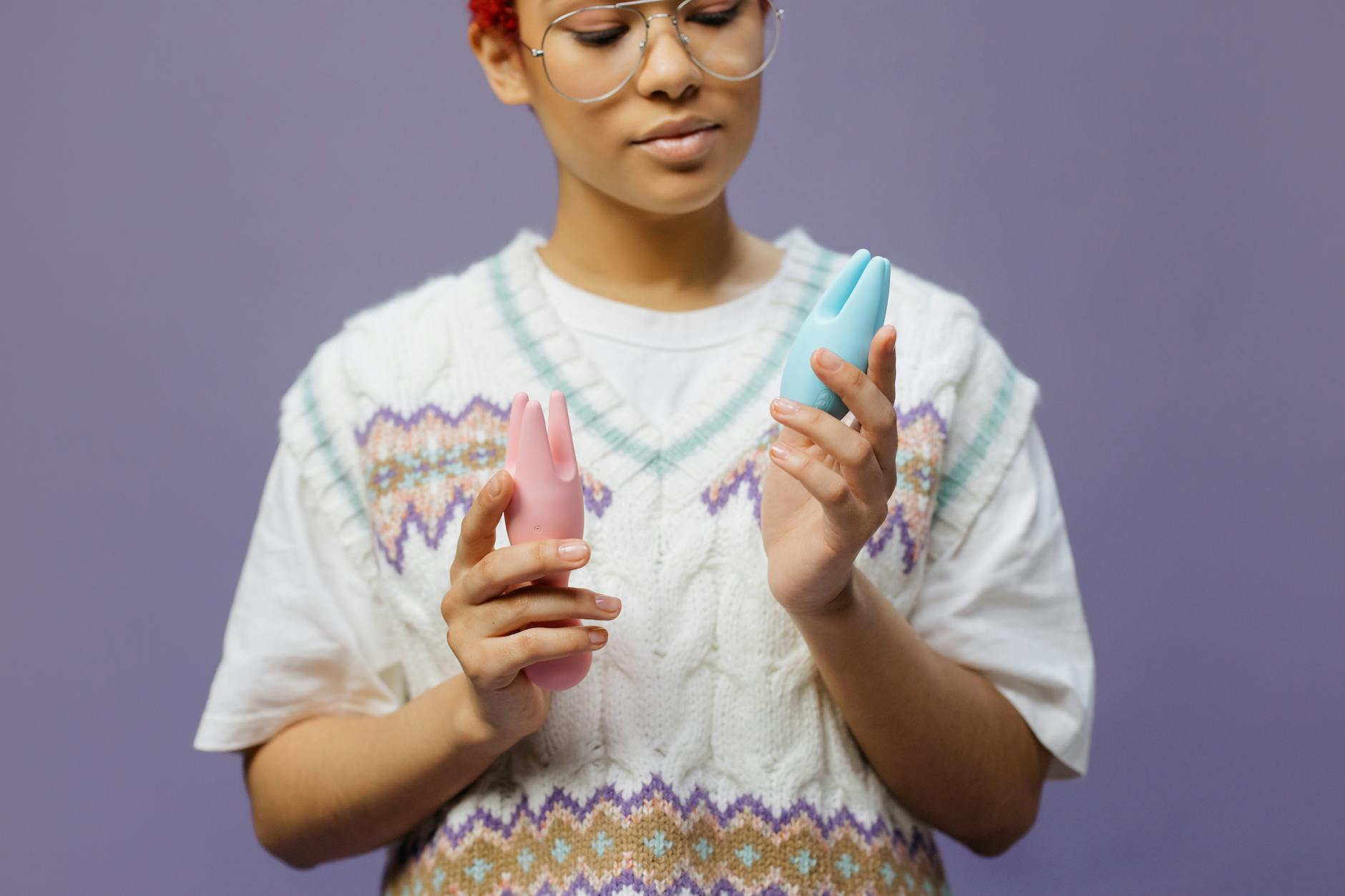
Photo by cottonbro studio on Pexels
What sensation might actually feel like at first
You might notice buzzing but not pleasure. That's not wrong. Your body is remembering before your mind catches up. Keep going gently. Orgasm is not the goal right now. Connection is.
You might cry. Depression and pleasure both involve a release of tension, and sometimes they get tangled together as you're coming back online. Crying during or after touch is common and okay.
You might feel nothing and then feel something 10 minutes in, or tomorrow, or next week. Neurochemistry doesn't run on your schedule. Patient, repeated touch teaches your brain that sensation is safe again.
Some people describe the first pleasurable sensations after depression as muted, like they're behind glass. That glass gets thinner each time. You're not broken. You're thawing.
If you have a partner, this conversation matters
Your partner needs to understand that desire returning is not the same as desire being present right now. If you say "I think I'm ready to try," that's not the same as "I'm definitely going to want this every time." Some sessions will feel good. Some will feel neutral. That variance is normal in recovery.
If your partner has been waiting, there's likely impatience or hurt. That's understandable. And it's not your job to fix it with your body. If you want to rebuild intimacy together, start by talking about what sex meant before depression, what it might look like now, and what "trying" actually means (no pressure to finish, no expectation of frequency, permission to stop).
Many couples find that introducing a tool like a clitoral vibrator actually eases this transition. It shifts the focus from "making sex work" to "exploring sensation together." You're not performing. You're rediscovering.
When antidepressants are part of the picture
Most antidepressants (SSRIs especially) can suppress sexual function as a side effect. Some people experience this as reduced desire, others as difficulty reaching orgasm. If you were on medication during depression, you might be experiencing double numbness: the depression itself plus medication effects.
If sexual side effects are severe, talk to your prescriber. Sometimes switching medications, adjusting timing, or adding a supplement helps. Sometimes the side effect fades after a few months. Sometimes it's worth it to stay on the medication because it keeps you functional. That's a real conversation with a real provider, not a DIY experiment.
If desire is returning but orgasm feels harder, that's often medication-related and often fixable. Clitoral vibrators like the Lem can help by providing consistent, strong stimulation that may bypass some medication effects. But it's still worth flagging to your doctor.
When to bring in a therapist or sex coach
If touching yourself triggers panic or intense shame, a trauma-informed therapist can help untangle why. Depression can live alongside sexual trauma, and they reinforce each other. You don't have to solve that alone.
If your partner is pressuring you to "get back to normal," couples therapy is worth trying. A mediator can help them understand that recovery isn't linear and that your timeline isn't negotiable.
If you're months into feeling better and desire still hasn't budged, that's worth exploring with someone qualified. Sometimes depression leaves behind sexual anhedonia (the inability to feel pleasure) that persists after the mood lifts. It's treatable, but it needs professional attention.
There's no shame in asking for help. Rebuilding desire after depression is hard. You don't have to do it alone.
The quiet truth about coming back
You might discover that what you wanted from sex before depression isn't what you want now. Your body has changed. Your mind has changed. Sometimes what emerges is better, quieter, more honest. Sometimes it takes months to feel curious about pleasure again, and that's fine.
The goal isn't to restore yourself to some pre-depression version. It's to learn who you are now, what your body actually feels like, and what brings you real pleasure without performance or pressure. A lemon vibrator, or any clitoral vibrator, is just a tool for that rediscovery. The tool doesn't matter. Permission and patience do.
People also ask
How long does it typically take for sexual desire to return after depression treatment begins?
There's no fixed timeline, but most people report noticing some shift in motivation and arousal within 4-8 weeks of starting antidepressants or therapy. Full desire recovery often takes 3-6 months, sometimes longer. Some people experience faster shifts; others move slower. The brain is rebuilding dopamine and serotonin pathways, and that's not a sprint. If after 6 months on effective treatment you still feel completely numb, that's worth discussing with your provider.
Can using a vibrator help desire come back faster?
Not directly, but it can help you reconnect with your body and normalize pleasure, which can ease anxiety around sex. When desire is returning but your nervous system is still cautious, a tool that lets you control intensity and pace can feel safer than partnered sex. Solo exploration with a lemon vibrator or other clitoral vibrator can help you remember what sensation feels like, which sometimes removes the block that's keeping desire stuck. It's not magic, but it's useful.
Is it normal to feel guilty about wanting pleasure again after depression?
Completely. Depression often comes with shame and self-criticism that linger even after mood improves. There's often a voice saying "You don't deserve this" or "You should be grateful just to feel okay." That voice is the depression talking, not truth. You absolutely deserve pleasure. Wanting it again is actually a sign of healing.
What if my partner is frustrated that I'm not interested in sex yet?
That frustration is real and yours to name, but your recovery timeline isn't negotiable. A partner who loves you understands that depression isn't a choice and recovery isn't fast. If they're pressuring you or making your lack of desire about them, that's worth addressing in therapy, individually or as a couple. You cannot will desire into being to make someone else comfortable. You can only honor your own timeline.
Can I use a lemon vibrator even if I'm still on antidepressants?
Absolutely. Medication doesn't make solo pleasure unsafe. It might make it slower or harder to reach orgasm, but that's neurochemistry, not danger. Some people find that the consistent, targeted stimulation of a clitoral vibrator actually helps when medication is dampening sensation. You might need a higher intensity setting (the Lem has multiple patterns), or you might need to use it more often as your body remembers. That's fine.
What if I use a vibrator and nothing happens? Does that mean my desire is broken for good?
No. A single session where you feel nothing is just one data point. Depression brain fog lingers. Anxiety about performance gets in the way. Sometimes your nervous system needs multiple exposures before sensation registers. Keep using the vibrator without expectation. Focus on the physical sensation (buzzing, warmth) rather than chasing an orgasm. Orgasm might come eventually. Connection to your body comes first.
You're not starting from zero
Your body remembers pleasure even when your brain forgot. The nerve pathways are still there. The capacity for sensation is still there. Depression just put a heavy blanket over it all. As that blanket lifts, sensation emerges in layers. Some days you'll feel nothing. Some days you'll feel a glimmer. Some days pleasure might surprise you.
A lemon vibrator, designed for clitoral stimulation that doesn't require intense pressure or complicated maneuvering, can be a gentle, manageable way to explore sensation as you're coming back. But the real work isn't the tool. It's patience with yourself. It's understanding what desire actually feels like when you're starting over. It's permission to move at your own pace.
You're not behind. You're not broken. You're rebuilding. And that's actually brave.
If navigating desire and connection feels overwhelming, reach out. We're here to talk through it.