Let's be real about what happens to foreplay
It's the first thing to go. You've been together for years, you know each other's bodies, and suddenly the 20-minute buildup feels like a luxury you can't afford. Foreplay gets compressed. Then it gets skipped entirely. Then one of you starts feeling like intimacy is just mechanical, and the other one is confused about what changed.
Here's what actually happened: foreplay didn't die because the relationship died. It died because no one intentionally protected it. And that's exactly where a lemon vibrator comes in, not as a workaround, but as a tool to rebuild the ritual itself.
Why foreplay matters more after years together
When you're new to someone, arousal builds naturally because everything is uncertain. Your nervous system is engaged. But long-term partners have a different problem: certainty kills anticipation. You know exactly what comes next, so your brain stops paying attention.
This is neurology, not romance failure. The brain habituates to familiar patterns. Dopamine (the attention and reward chemical) drops when stimulation becomes predictable. That's why the early-relationship intensity fades. It's not weakness or lost love.
Foreplay exists to reset that habituation. It says: "I'm pausing. We're going to pay attention again. There's intention here." The longer the foreplay, the more your nervous system wakes up, and the more satisfying the entire experience becomes for both partners.
How a lemon clitoral vibrator slows everything down
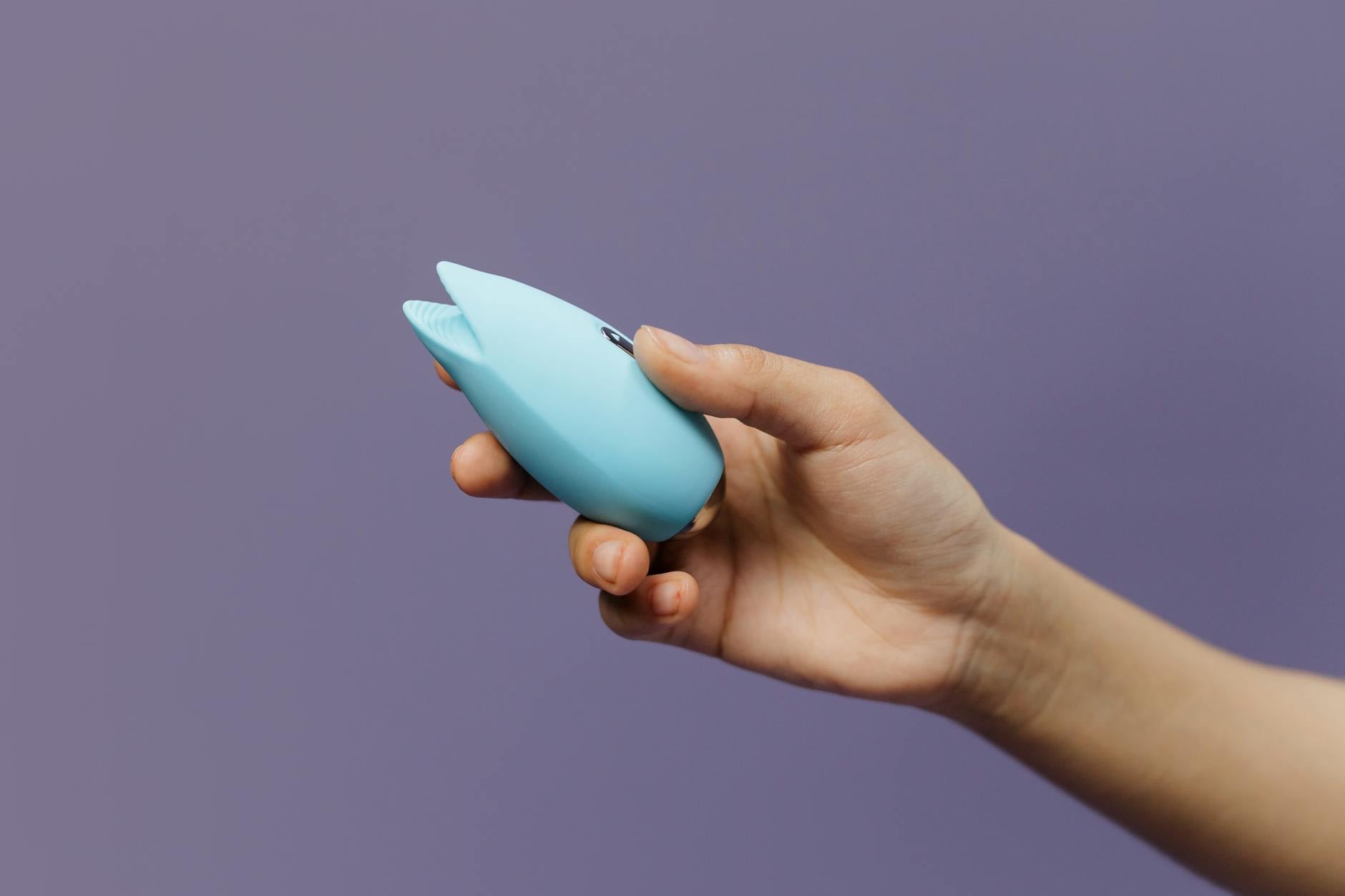
Here's where a lemon sucker changes the game. A clitoral vibrator isn't a shortcut to orgasm. When used correctly during foreplay, it's the opposite: it's permission to spend time doing one thing really well.
Instead of a 3-minute warm-up followed by intercourse, you've got time. Real time. You can spend 10, 15, even 20 minutes on clitoral stimulation using a lemon vibrator while your partner touches you elsewhere, talks to you, watches you respond. That's not rushing. That's foreplay actually happening.
The vibrator does something else too: it gives your partner permission to step back. A lot of partners feel pressure to be the sole source of stimulation. If they're not directly touching you, they're "not doing their job." A lemon vibrator flips that. Your partner can hold it, guide it, or watch. They can use their hands elsewhere. Suddenly foreplay becomes collaborative instead of performed.
The seven-minute rule for rebuilding slow play
Here's a structure that works for couples who've lost foreplay:
Minutes 1-2: No vibrator yet. Touch, kissing, whatever your usual warm-up is. Keep it short. The point is to signal: "This is intentional. We're shifting modes now."
Minutes 3-7: Introduce the lemon vibrator. Start on the lowest setting (usually pattern 1-3 on Hello Nancy's lemon clitoral vibrator). The receiving partner stays relatively still. The giving partner explores: hover it, circle it, use different patterns. The point is sensation discovery, not orgasm chasing.
Talk during this phase. "How does that feel?" "Tell me what you want." "I love watching you like this." The words matter because they rebuild the emotional connection that foreplay used to carry.
Minutes 7+: Intensity can increase if both partners want it. But the ritual is already in place. You've spent 7 minutes on pure connection. Anything that follows is a bonus, not the main event.
Why this works when partners have different arousal speeds
One of the biggest foreplay killers in long-term couples is arousal mismatch. One partner gets ready in five minutes. The other needs fifteen. Rather than bridging that gap, couples often just race to the faster partner's timeline.
A lemon vibrator makes that gap irrelevant. The slower-arousal partner gets sustained, concentrated stimulation. The faster partner gets to participate without needing to generate all the input themselves. Both partners end up in the same place at roughly the same time, which almost never happens naturally.
I've seen couples describe this as "finally being on the same page again." Not because anything magical happened, but because they spent time together on purpose instead of rushing toward a destination.
How to actually talk about this with your partner
You can't just show up with a lemon vibrator and expect your partner to understand what you're trying to do. The conversation matters as much as the tool.
Try: "I've noticed our foreplay got really short, and I miss that part. I want us to slow down, but I also don't want it to feel like pressure. I was thinking we could try something that might help us both enjoy it more."
Maybe they've noticed too. Maybe they've been missing it. Or maybe they're relieved someone said it out loud. The point is the conversation is about rebuilding a ritual together, not about one person's arousal or one person's "performance."
If your partner seems resistant, ask what that's about. Sometimes it's genuine discomfort with vibrators. Sometimes it's feeling like they're "not enough." That's a different conversation entirely, and it's worth having before you introduce a tool. You can read more about that in how to use a lemon vibrator with your partner after a long break from toys.
The specific patterns that work best for foreplay
Most clitoral vibrators have 3-5 patterns. For extended foreplay, stick with the gentler ones: steady pulses, slow waves, or gentle rhythms. Save the intense patterns for when you're both clearly ready for them.
The lemon vibrator's design works particularly well here because the suction motion is naturally less intense than traditional vibration. You can spend longer on it without the sensation becoming overwhelming or numbing. That's actually the opposite of what you want during a 20-minute session.
Variation matters too. Switch patterns every 2-3 minutes. Try different positions: directly on the clitoris, circling it, hovering above. This keeps both partners engaged because there's always something new to explore.
When foreplay rebuilding goes wrong
Sometimes couples try this and it feels awkward or forced. That usually means one of two things: you're still rushing ("Let's do foreplay for six minutes then get to the real thing") or there's unspoken resentment about intimacy that the vibrator can't fix.
If you're still watching the clock, you're not actually slowing down. Set a real boundary: "We have 30 minutes. The first 15 are just foreplay. No other agenda." That changes everything.
If there's resentment underneath ("My partner never wants sex" or "I feel taken for granted"), that's relationship work, not vibrator work. A lemon clitoral vibrator is a tool for couples who want to reconnect, not a fix for couples who are avoiding harder conversations.
The difference between couples who keep foreplay and couples who lose it isn't passion. It's whether someone decided it was worth protecting.
The physical sensations people report
Once couples actually spend time with extended foreplay using a clitoral vibrator, the feedback is consistent: "I forgot what it felt like to be teased," "My partner was so present," "I had multiple sensations instead of one straight path."
The nervous system needs time to unfold. When you rush, you hit the fast neurological pathway: stimulation, arousal, orgasm. That path is functional but flat. Extended foreplay lights up more neural networks. More anticipation. More varied sensation. Different parts of the pelvic floor and surrounding tissue get engagement. Orgasms, when they come, feel fuller.
You're not achieving anything you couldn't achieve faster. You're just noticing more along the way. And that noticing, that attention, is what foreplay actually is.
How to know if this is working
You'll feel it. Foreplay that's actually happening feels different: more present, less performance-y, more connected. Your partner will be more engaged because they're not worried about "taking too long." You'll feel less rushed because the time is built in intentionally.
After a few sessions, check in: "Is this better?" "Does this feel more like us?" Those questions matter more than whether you both orgasmed or how quickly it happened. If the answer is yes, you've rebuilt something real. You can read more about how to use a lemon vibrator when partners have different refractory periods if you're also navigating recovery timing after intimacy.
FAQ
How long should foreplay actually last in a long-term relationship?
There's no universal answer, but research on couples satisfaction shows that 10-20 minutes of intentional, focused foreplay correlates with higher satisfaction than rushed sessions. The number matters less than the intention. If you're both present and engaged, 10 minutes beats 30 minutes of distraction.
Can a lemon vibrator really help rebuild foreplay if we've skipped it for years?
Yes, because it's not about the vibrator. It's about the permission structure the vibrator provides. It signals: "We're doing this differently now." That signal is what couples actually need.
What if my partner thinks a vibrator means I'm not satisfied with them?
This is worth addressing directly. Say something like: "This isn't about you not being enough. It's about us having more tools to enjoy each other." Many partners feel this anxiety initially, but it usually dissolves once they see it's collaborative, not competitive.
Is it normal for sensation to feel different when you actually slow down?
Completely. Your nervous system is more present, so you notice more. Texture, temperature, rhythm. It's not that the sensation changed. It's that you're actually feeling it.
Should foreplay feel "productive," like it's working toward orgasm?
No. That mindset will kill the whole thing. Foreplay is the event, not the setup. If orgasm happens, that's nice. If it doesn't, foreplay did its job by being foreplay.
How do I bring this up without it sounding like I'm complaining about our sex life?
Be specific and positive: "I miss that part where we just focused on you for a while. I want to do that again." Frame it as something you want to rebuild together, not something that's broken.