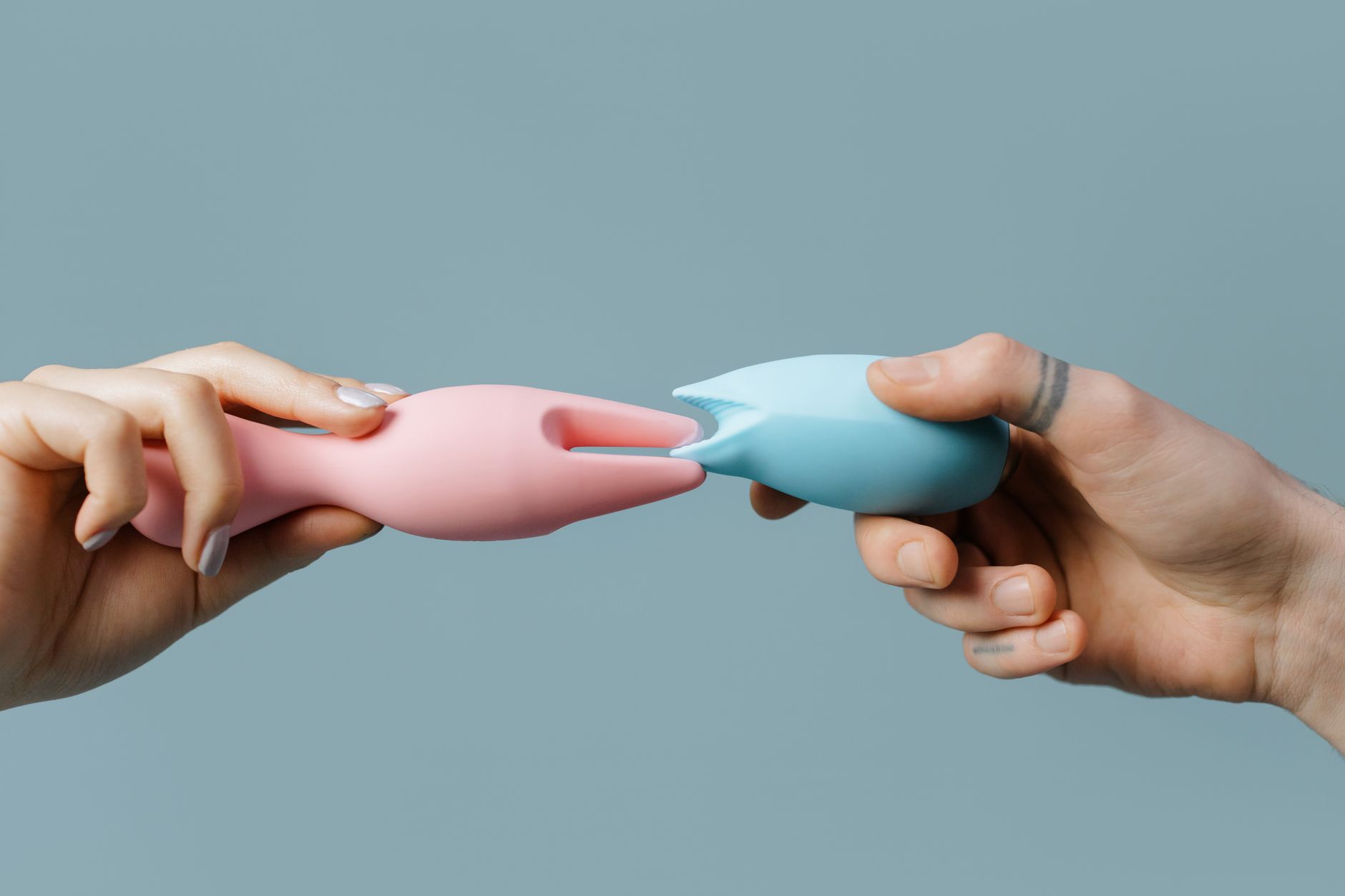
How to Use a Lemon Vibrator When Partners Have Different Postpartum Recovery Timelines
Here's the thing nobody warns you about: your body and your partner's timeline for wanting sex again are almost never synced.
One of you might feel physically ready at six weeks. The other might need six months. And the one who's ready first often feels rejected. The one who's not ready yet feels pressured. Both feel alone. Neither feels like they can say it out loud without blowing something up. That gap is real, and it's where a lot of couples either reconnect with honesty or quietly build resentment.
Lemon clitoral vibrators like the Lem exist in exactly this space. They're not a bandaid for mismatched desire. They're a tool for bridging it without forcing anyone to do something their body and mind aren't ready for yet.
Understanding postpartum recovery isn't linear
Here's what most couples don't know: recovery isn't about when the bleeding stops or when a doctor clears you for penetration.
Physical healing and desire rewiring happen on completely different timelines. One partner might have healed from a vaginal tear or C-section incision and still feel zero sexual interest. The other might feel emotionally distant from sex not because of physical pain but because of the psychological weight of early parenthood. Sleep deprivation alone tanks desire for weeks. Hormonal shifts during breastfeeding suppress arousal in ways that have nothing to do with physical readiness.
I see this constantly in couples therapy. The birthing partner gets cleared by their OB at eight weeks and assumes that means they're sexually functional again. But their body is still cortisol-flooded from months of broken sleep, their nervous system is in constant high alert (is the baby breathing? did I forget something?), and touch feels like just one more person needing something from them. Meanwhile, the other partner has been waiting, their own desire building or fading depending on how they're processing the lack of physical connection.
The real timeline looks like this: physical healing (8-12 weeks), emotional readiness (3-9 months), desire alignment (whenever, honestly, no pressure). These almost never overlap. And that's completely normal.
Why mismatched timelines trigger so much shame
The hardest part about being out of sync isn't the lack of sex. It's the story we tell ourselves about what it means.
The person wanting sex again thinks: "They don't find me attractive anymore." Or: "This is what parenthood means now." Or worse: "I'm selfish for wanting this when they need rest."
The person not ready yet thinks: "I'm broken." Or: "Something's wrong with me." Or: "My partner doesn't understand what I'm going through."
Neither is true. Both are normal nervous system responses to an objectively intense life transition. But shame lives in the gap between these two stories, and shame makes it impossible to talk about any of it.
This is where lemon adult toys become unexpectedly useful. Not because a vibrator fixes mismatched desire. But because a lemon suction toy gives you permission to explore pleasure independently while your partner's timeline catches up. It removes the performance pressure. It stops turning your body into a point of conflict.
How the Lem works when you're not ready for partnered sex yet
Let's say you're the one who's not ready. Your body healed. Your doctor said okay. But you feel touched out, exhausted, or just not there yet.
The pressure to "get back to normal" can be intense. You might push yourself into partnered sex before you're ready because you feel guilty. Or you might avoid it entirely and build resentment from your partner. The Lem offers a third option: solo exploration.
When you use a lemon clitoral vibrator alone, you're not performing for anyone. You're not watching your partner's face to gauge whether they're enjoying themselves. You're not managing their disappointment. You're just checking in with your own nervous system and asking: what does pleasure feel like right now, when I'm not performing?
For post-pregnancy bodies, this is huge. Your clitoris might feel different. Sensation might be muted or hypersensitive. Arousal might take longer to build. A lemon vibrator lets you figure that out on your own timeline, without someone else's expectations in the room.
The Lem specifically works well here because suction stimulation is gentler than friction. If your tissue is still delicate or you're dealing with lingering sensitivity, the suction pattern bypasses that friction issue entirely. You can start at the lowest setting and explore what feels good without the pressure of making someone else happy.
How the Lem works when you're ready and your partner isn't
Now flip the scenario. You want physical connection. Your partner needs more time. The longer you wait without any outlet, the lonelier you become.
Using a lemon clitoral vibrator here isn't about replacing partnered sex. It's about keeping your own sexuality alive while you wait. It's about not letting your desire calcify into resentment.
When you know you can access pleasure independently, the dynamic shifts. You're not resentful of your partner for not being ready. You're not watching them to see if maybe tonight is the night. You're not turning down the part of yourself that wants physical sensation because you think the alternative is making them uncomfortable.
Instead, you can be patient without disappearing.
And here's the kicker: couples who can hold space for mismatched timelines without shame often rebuild intimacy faster than couples who push too hard too soon. Because rebuilding intimacy isn't about forcing sex before someone's nervous system is ready. It's about staying connected to yourself and your partner while the timeline unfolds.
Building the conversation around different paces
Using a lemon vibrator won't work if you're not talking about why the timeline is different in the first place.
If you're the one who's ready first, the conversation might sound like: "I miss feeling close to you. I'm not okay with how long this is taking, and I'm also not going to push you into something you're not ready for. So I'm going to take care of myself, and I need you to know that's not about you."
If you're the one who needs more time, it might be: "My body isn't ready yet. My brain is still in survival mode. I'm not rejecting you. I need you to know I'm dealing with something that has nothing to do with how I feel about you."
Both of these statements create permission. Permission to have different paces. Permission to take care of your own nervous system. Permission to use tools like a lemon suction toy without it meaning something is broken between you.
The conversation also needs a realistic timeline. Not a specific date. Just: "I think I'll be ready to try again in about two months." Or: "I'm going to check in with myself every month to see where I'm at." This turns the unknown into something you're managing together instead of something you're avoiding.
When to bring a partner into the picture
Eventually, most couples want to reconnect physically. The question is when and how.
If you're the partner who needed more time, using a lemon clitoral vibrator solo first gives you a map. You know how your body responds. You know what settings work. You know roughly what timeline feels realistic for partnered exploration.
When you're ready to invite your partner in, that information matters. You can say: "I'd like to try this with you, and I think I need it to look like this." You're not guessing. You're not pushing yourself into something you haven't explored yet.
For the partner who's been waiting, this is gold. You get to participate in something they've chosen, not something they're forcing themselves through. That distinction completely changes the energy.
The Lem works particularly well for this transition because you can use it during partnered sex. One partner can use the lemon suction toy while the other is involved in a different way—kissing, touching elsewhere, just being present. It takes pressure off both people to perform a specific way and lets you rebuild physical connection at whatever pace actually works.
The real timeline for postpartum intimacy
Let me be direct: there's no "should" here.
Some couples reconnect physically within a few months. Some take a year. Some take longer. All of it is normal. What matters is that you're not building resentment while the timeline unfolds. And you're not shaming yourself or your partner for having different nervous systems.
A lemon vibrator can't fix a broken relationship or force someone to be ready before they are. What it can do is give each of you permission to stay connected to yourself while you figure out what reconnection looks like together.
People also ask
How soon after birth can I use a lemon vibrator?
If you had a vaginal birth without complications, most people feel comfortable exploring solo stimulation around 6-8 weeks postpartum, once bleeding has stopped and basic healing is underway. If you had a C-section, stitches, or tearing, check with your healthcare provider first. Everyone heals differently. Some people feel ready earlier. Some need longer. The suction motion of the Lem is gentler than friction-based stimulation, which makes it a reasonable choice for sensitive postpartum tissue, but only if you're physically cleared and emotionally interested.
What if using a lemon toy makes my partner feel replaced or threatened?
This is the conversation to have before you start, not after. Say something like: "I want to explore my own pleasure while we figure out our timeline. This isn't about you. It's about me staying connected to myself." If your partner struggles with this, couples therapy can help you both understand what's underneath that fear. Usually it's not about the vibrator. It's about feeling abandoned or replaced. Name that directly. A lemon clitoral vibrator isn't replacing them. It's giving you both space to have different timelines without resentment building.
Can my partner use a lemon vibrator on me if I'm not ready for penetration?
Absolutely. The Lem is designed for external clitoral stimulation, so it works great for couples who want partnered pleasure without penetration. This can be a beautiful bridge option when one partner is ready for physical connection but penetration still feels uncomfortable or risky. You get to feel close and loved without anyone's body having to do something it's not ready for yet.
How long does it typically take for postpartum desire to return?
It's genuinely different for everyone, but research suggests most people feel some return of baseline desire around 3-6 months postpartum, with full desire often taking longer. Breastfeeding can suppress it longer. Sleep deprivation extends it. Some people never feel exactly like they did before, and that's also completely normal. Stop waiting for it to snap back. It usually doesn't. Instead, check in with yourself: what does desire look like now? What conditions help it show up? That might look totally different than it did before, and that's not a loss. It's just a shift.
Is it normal to feel touched out after having a baby?
Completely normal. You've been touched nonstop for months. Your nervous system is overstimulated. The last thing you want is another person's hands on your body. This feeling usually fades as the intensity of early parenting settles, but it can take months. Don't force physical affection before you're ready. Don't shame yourself for needing space. And don't let your partner make it mean something it doesn't. Touch will feel good again. Just not right now.
Can the Lem help with postpartum sensitivity issues?
Yes, in a couple of ways. If your clitoris feels hypersensitive, the Lem's suction pattern is adjustable and gentler than direct vibration. If sensation feels numb or dulled from hormonal shifts or nerve impact during birth, the specialized suction pattern can sometimes wake up sensation more effectively than traditional vibrators. Everyone responds differently, but many people find that exploring with a lemon clitoral vibrator when sensation peaks during penetration helps them map out what's changed and what still works.
The bottom line
Postpartum recovery isn't just about your body healing from birth. It's about two people with different nervous systems and different timelines figuring out how to stay close while you're both becoming different versions of yourselves.
Mismatched desire doesn't mean something's broken. It means you're both human and you're both adjusting to something massive.
A lemon vibrator won't fix that. But it can help you both stay connected to yourselves and each other while the timeline unfolds naturally. That's not a consolation prize. That's actually how healthy couples rebuild intimacy.
When you're ready to talk about what's happening, when you're ready to explore your own pleasure without shame, and when you're ready to invite your partner back in, that conversation becomes way easier. Because you're not carrying the weight of resentment or guilt. You're just two people checking in with what feels real and true right now.
That's the whole thing. Start there.